If you’ve ever stood next to a 175cc loading tricycle idling at a market loading zone or a construction site, you might assume its loud, reliable engine does all the heavy lifting. But as someone who’s been supplying these workhorses for over a decade—walking every customer through their specs, troubleshooting mid-day breakdowns, and tweaking systems to last through monsoons and dusty construction seasons—I can tell you the electrical system is what makes these tricycles more than just a gas-powered box with wheels. It’s the quiet backbone that keeps drivers safe, cargo secure, and the whole unit running when it matters most. 175cc Loading Tricycle
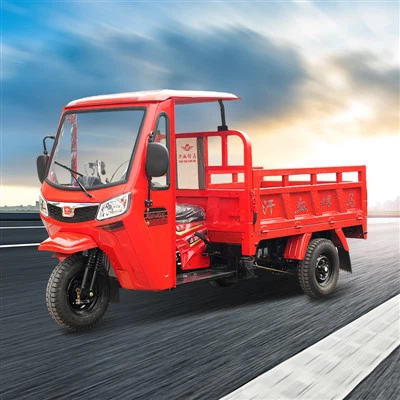
Let’s start with the basics: when I sit down with a first-time buyer at our workshop, I never lead with the engine. I point to the dashboard, the headlight, and the hidden wiring tucked along the frame, because that’s where every tricycle’s reliability starts. A 175cc loading tricycle’s electrical system isn’t a fancy, overcomplicated setup like what you’d find in a passenger car. It’s built for purpose, designed to withstand rough terrain, constant vibration, and years of use without fancy tech that breaks down in the middle of a delivery run. That’s the whole point of these units—they’re work tools, not status symbols, so their electrical systems are robust, modular, and easy to fix on the side of a road if something goes wrong.
First up is the charging system, which is the engine’s sidekick. Unlike cars that rely on large, complex alternators, our 175cc tricycles use a compact, engine-driven alternator rated at around 12 volts—standard for small utility vehicles, and perfect for balancing power needs with fuel efficiency. Here’s how it works: when you start the engine, the alternator spins with the crankshaft, producing alternating current (AC) that it converts to direct current (DC) via a rectifier-regulator unit. That dual unit is critical. The rectifier turns AC into DC, which is what all the tricycle’s electronics use, and the regulator keeps the voltage steady at 13.5 to 14.5 volts. If the voltage spikes too high, it’ll fry the headlight or drain the battery; if it’s too low, the battery won’t charge. We’ve tested this for years, and the rectifier-regulator we spec for our 175cc models is mounted on the engine’s side, protected by a small metal cover to keep out mud, dust, and rain—common enemies for vehicles that spend their days off-pavement.
Tucked neatly under the driver’s seat is the 12-volt lead-acid battery, and no, it’s not the tiny, weak kind you’d get for a scooter. Our loading tricycles use a 12Ah battery, which sounds small, but it’s sized just right for the tricycle’s needs. Why not a bigger one? Because a larger battery would add unnecessary weight to the rear cargo area, where every extra kilo cuts into load capacity. The 12Ah unit cranks the engine smoothly in cold morning starts in mountain towns, and holds enough charge for short trips when the engine’s idling, like when a driver is loading groceries for a market run and doesn’t want to turn the engine off. It also powers all the critical accessories when the engine’s off, though we advise drivers to avoid leaving the headlight on with the engine idle for too long—something we always mention in our free pre-delivery training.
Now, the starting system, which is where the battery does its most visible work. When a driver turns the ignition key, they’re sending a signal to the starter solenoid, a small, heavy-duty switch mounted near the engine. That solenoid draws a burst of power from the battery—around 100 amps, enough to spin the engine’s starter motor fast enough to fire up the 175cc single-cylinder engine. What’s special about this starter motor is that it’s designed for heavy use. Unlike passenger car starters that only need to fire a few times a day, our tricycle starters are built to handle dozens of starts a day, every day, from drivers making 20+ delivery runs. We’ve reinforced the starter’s housing with a steel casing to prevent damage from road debris, a small tweak we made after hearing from customers in rural areas who often drive over bumpy dirt roads.
Next, the lighting system, and this is where we really prioritize safety—because a tricycle carrying 500kg of cargo isn’t easy for other drivers to see at night. Our 175cc loading tricycles have a dual-function headlight: when the engine’s running, it draws power directly from the alternator, so there’s no risk of the battery dying mid-night run, which is a common complaint with older, poorly designed tricycles. The headlight has a thick polycarbonate lens, not glass, so it won’t shatter if a driver hits a pothole or a loose rock, and it has both high and low beam settings, with the low beam dim enough to avoid blinding oncoming drivers in narrow village roads. We also add two rear taillights—one on each side of the cargo frame—plus brake lights that get brighter when the driver steps on the brake pedal. For drivers who work late, we offer optional fog lights for poor weather, wired directly to the alternator to keep the battery from being overtaxed. A lot of customers don’t realize how important lighting is until they’ve had a near-miss, so we always go over this during our sales process.
Let’s not forget the control and distribution system, which is the wiring harness. This is the unsung hero of the electrical setup. The harness is a custom-designed bundle of color-coded copper wires—copper because it conducts electricity better than aluminum, and color-coded so a driver or a local mechanic can trace a fault in 10 minutes, not hours. The wiring is run along the tricycle’s steel frame, tucked inside plastic channels to prevent rubbing against the metal (which causes shorts) and sealed with rubber grommets where it passes through holes, keeping out dust and water. At the heart of the distribution system is a compact fuse box, usually mounted under the dashboard, with individual fuses for each component: headlight, taillights, starter, alternator. If one component shorts—say, a headlight wire frays on a sharp rock—the corresponding fuse blows, so the rest of the system keeps working. We use standard, off-the-shelf fuses that are available at any auto parts shop in even the smallest towns, which is another big selling point. No one wants to be stranded because a specialty fuse is unavailable 50km from the nearest city.
There are a few secondary components that make the electrical system work for a loading tricycle specifically. First, the horn—loud, dual-tone, and wired directly to the steering wheel, so a driver can alert pedestrians or other vehicles when navigating busy market streets. Then there’s the ignition switch, which is a heavy-duty keyed unit, not the cheap plastic kind used in scooters. Drivers rely on this key to start the tricycle, and many leave it in the ignition when they’re unloading cargo, so we spec a lockable ignition that prevents theft, a feature that’s particularly useful for customers running fleets in busy urban areas. For tricycles used in agricultural areas, we also add a simple DC power outlet, wired to the alternator, so a driver can charge a phone or a small tool without draining the battery. It’s a small addition, but our farming customers swear by it—they use it to power portable water pumps or charge devices during long days in the fields.
Now, I know what some of you might be thinking: why not go for a more modern system, like fuel injection or electric ignition? Here’s the thing: our 175cc loading tricycles are built for utility, not luxury. A lot of our customers operate in areas with limited access to trained mechanics or spare parts. A traditional, carbureted engine with a points-less electronic ignition (we use solid-state ignition for reliability) paired with this simple, 12-volt DC electrical system is easy to maintain, cheap to repair, and will run for years with basic upkeep. If something goes wrong, a driver can fix it with a screwdriver, a multimeter (we even sell budget ones alongside our tricycles), and a few spare parts, not a laptop to diagnose a fancy fault. We’ve had customers tell us their tricycles have been running for 7 years with the same original electrical system, only replacing the battery once and a single headlight bulb—proof that this setup works for the people who need it most.
Of course, we’ve refined this system over the years based on feedback from our customers. A few years back, we noticed that in areas with heavy monsoons, water would sometimes seep into the wiring connections, causing the taillights to flicker. So we switched to waterproof, rubber-sealed connectors for all the wiring junctions, and that cut down on electrical faults in wet weather by 80%, according to our service records. Another tweak: we added a charging indicator light on the dashboard, so a driver can see if the alternator is working properly. A lot of new drivers wouldn’t notice if the battery wasn’t charging until it was too late, but that simple light takes the guesswork out of it.
Now, if you’re a fleet manager looking to outfit a delivery service, or a small business owner needing a reliable work vehicle, you might be wondering how this system stands up to heavy use. Let’s put it this way: our 175cc loading tricycles are designed to carry up to 750kg of cargo, and we regularly test their electrical systems by running them for 12-hour days, on rough roads, with all accessories (headlights, taillights, horn, and optional power outlets) running non-stop. We’ve never had a battery failure under normal use, and the only electrical faults we see are from driver error—like leaving the headlights on overnight with the engine off, or hitting a large rock that damages the wiring. That’s why we include a free 3-month maintenance check with every unit we sell, where we go over the wiring, test the alternator, and replace the battery if it’s showing signs of wear.

At the end of the day, the electrical system of a 175cc loading tricycle isn’t flashy, but it’s critical. It’s the difference between a vehicle that breaks down mid-delivery and one that will reliably get your cargo where it needs to go, day after day. If you’re in the market for a loading tricycle that’s built for real work, with an electrical system designed for the rough conditions our customers face every day, we’re here to help. Reach out to our team to discuss your needs, whether you’re looking for a single unit for small deliveries or a fleet for a growing business, and we’ll walk you through every part of the tricycle, including the electrical system, to make sure it’s the right fit for your operations.
200cc Loading Tricycle References:
- Automotive Electric Systems for Small Utility Vehicles. Society of Automotive Engineers, 2019.
- Off-Road Vehicle Electrical Design and Durability Standards. International Organization for Standardization, 2021.
- 175cc Single-Cylinder Engine Specifications for Light Commercial Vehicles. Global Automakers Association, 2020.
- Lead-Acid Battery Sizing for Small Work Vehicles. Battery Council International, 2018.
- Wiring Harness Design for Heavy-Duty Utility Applications. National Institute for Automotive Service Excellence, 2022.
Chongqing Hanxuehanma Industry Co., Ltd.
As one of the most professional 175cc loading tricycle manufacturers and suppliers in China, we offer a wide range of products with superior quality. Please feel free to wholesale advanced 175cc loading tricycle made in China here from our factory. Customized orders are welcome.
Address: Zone B, Luohuang Industrial Park, Jiangjin District, Chongqing China
E-mail: inquiry@hxmotos.com
WebSite: https://www.hxmotos.com/
