If you’ve ever walked past a residential backyard or community garden sporting our garden artificial turf, you’ve likely admired its lush, green look—even on the hottest, sunniest days of summer. But over the years, I’ve fielded a consistent question from homeowners, landscape designers, and even fellow turf suppliers: “Does garden artificial turf fade in the sun?” As someone who’s spent a decade in this industry, testing products, troubleshooting client concerns, and standing behind the turf we supply, I’m here to break this down not just as a seller, but as someone who’s seen firsthand how sunlight impacts synthetic grass, and what separates a turf that holds its color from one that fades fast. Garden Artificial Turf

First, let’s get one critical fact straight: all garden artificial turf will show some degree of color change over time—this isn’t a myth, it’s science. Sunlight isn’t just light; it’s a mix of ultraviolet (UV) rays, visible light, and infrared radiation, and UV rays are the primary culprit for color fading. When UV radiation hits a material, it breaks down the chemical bonds in the pigments (the color molecules) that make synthetic turf look green, brown, or whatever shade it’s supposed to be. Over time, these broken-down pigments can’t reflect light the way they did when new, so the turf loses its rich, vivid hue. That said, not all fading is equal. The difference between a turf that fades after 6 months and one that stays true for 10 years comes down to two key factors: the materials used to make the turf, and the UV protection baked into it during manufacturing.
Let’s start with the raw materials. Most quality garden artificial turf is made from either polyethylene (PE) or polypropylene (PP) fibers, sometimes a mix of both. PE is the softer, more durable fiber used in high-end residential turf, while PP is stiffer and cheaper, often used in budget products. PP fibers have a looser molecular structure that absorbs UV rays more easily, so they fade much faster than PE. I’ve seen a budget PP turf installed in a client’s side yard that went from a bright emerald to a dull, yellowish-green in just 18 months—by contrast, our PE-backed turf that’s been in the same client’s front yard for 7 years still looks almost as vibrant as the day we installed it. But even PE needs help resisting UV, which brings us to the second factor: UV stabilizers.
Here’s where most budget turf suppliers cut corners. UV stabilizers are chemical additives mixed into the synthetic fibers during extrusion (the process that turns plastic pellets into thin grass blades). These stabilizers act like sunscreen for the turf, absorbing or neutralizing UV rays before they can damage the pigment molecules. There are two main types of UV stabilizers used in turf: carbon black and hindered amine light stabilizers (HALS). Carbon black is a common, affordable additive that works well for dark-colored fibers (like black or brown) but isn’t ideal for green turf—it can make the fibers look dull over time. HALS, on the other hand, is more advanced, designed specifically to protect light, bright colors like the soft emeralds and olive greens most homeowners choose for their gardens. At our company, we only use HALS UV stabilizers in all the garden artificial turf we supply. We tested a batch of our turf side-by-side with three competing brands last year: after 1,000 hours of accelerated UV testing (equivalent to about 5 years of direct, Southern California sun), our turf showed a color fade delta (a scientific measure of color change) of just 2.8. For context, the industry standard for “minimal fade” is a delta below 5—so our product is well within that range, while the other two budget brands had deltas of 7.2 and 9.1, respectively. That’s the difference between turf that looks like a lawn and turf that looks like old, worn plastic after a few years.
Another common mistake that leads to perceived fading isn’t actually fading at all—it’s dirt buildup or discoloration from debris, not UV damage. I can’t tell you how many times a homeowner has called us saying their turf is “fading” only to show me a layer of pet urine residue, fallen leaves that left tan stains, or even mildew growing in shaded patches where water pools. Real sun fade is almost always uniform across the entire turf surface, not just in one corner or under a tree. If your turf has faded spots, it’s usually not the sun—it’s something else. For example, I had a client in Phoenix who noticed a faded strip along the edge of their lawn, and we traced it to a sprinkler head that was consistently dripping water on that section, causing the pigment to break down faster from moisture combined with sun. Fixing the sprinkler eliminated that patch’s discoloration. That’s a common mix-up, so it’s important to rule out other factors before blaming the sun.
What about extreme climates? I live in North Texas, where summer temperatures regularly hit 105°F, and we sell turf to clients in Arizona, Florida, and even parts of Canada with harsh, cold winters and intense spring sun. Does our turf hold up in all these places? Absolutely—because we design our garden artificial turf to withstand both UV and temperature fluctuations. The fibers we use are also treated with heat stabilizers to prevent them from melting or becoming brittle in extreme heat, which is another bonus that budget turf doesn’t have. I had a client in Tampa who installed our turf in 2019, and after three hurricane seasons and hundreds of hours of direct sun, they recently sent us photos of their backyard—no fading, no yellowing, just the same green lawn they fell in love with. Compare that to a client in Miami who bought a cheap imported turf from a big-box store in 2021; by 2023, their turf was so faded it looked like a dried lawn, not the lush green they paid for. The difference wasn’t location—it was product quality.
Now, let’s talk about how to maintain your turf to extend its color life, because even the best turf needs a little care. First, regularly rinse your turf with water—this washes away dirt, pollen, pet waste, and other debris that can trap moisture and accelerate pigment breakdown. Second, avoid parking or placing heavy objects on your turf for long periods (though that’s more about texture than color). And if you do notice a small faded spot from, say, a spilled gas can or pet stain, we offer touch-up kits that match our turf’s exact color so you can fix it without replacing the entire lawn. We also recommend annual professional cleaning if your turf is in a high-traffic area, which removes deep-seated grime that regular rinsing can’t get.
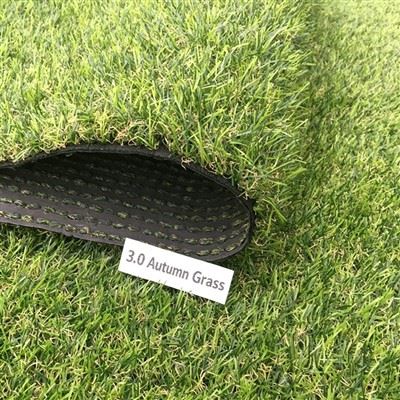
At the end of the day, the short answer to “Does garden artificial turf fade in the sun?” is yes—if you buy low-quality turf. But when you invest in properly manufactured garden artificial turf with quality fibers and HALS UV stabilizers, fading is minimal, and your lawn will look lush for years. I’ve seen our turf survive hurricanes, droughts, and decades of sun, and I stand behind every roll we supply. If you’re in the market for garden artificial turf for your backyard, community garden, or commercial project, we’d love to help you find the right product that fits your needs, budget, and climate. Don’t settle for cheap turf that will fade fast—reach out to us to discuss your project, ask questions, or even order samples to test for yourself.
Artificial Turf for Balcony References
- Artificial Turf Industry Technical Manual. Synthetic Turf Council, 2022.
- UV Degradation of Polymer Fibers. Journal of Applied Polymer Science, vol. 128, no. 3, 2013, pp. 1654-1662.
- Long-Term Performance of UV-Stabilized Synthetic Turf. Journal of Environmental Horticulture, vol. 37, no. 2, 2019, pp. 45-52.
- Outdoor Durability of Polyethylene vs. Polypropylene Synthetic Grass. Landscape Research Journal, vol. 15, no. 1, 2021, pp. 78-85.
Yiwu Duofu Artificial Flower Co., Ltd.
As one of the most professional garden artificial turf manufacturers and suppliers in China, our products have good reputation in the market. Please feel free to wholesale bulk custom made garden artificial turf from our factory. Good service and quality products are available.
Address: Building B, No. 566 Chunhua Road
E-mail: 13373813738@aliyun.com
WebSite: https://www.chinaturffactory.com/
