If you’ve ever stood next to a construction site, seen a warehouse crew cleaning grease-caked heavy machinery, or watched a bridge restoration team strip decades-old rust from steel girders, you’ve probably heard the high-pitched whine of a diesel high-pressure water pump at work. For 12 years, I’ve supplied these pumps to contractors, industrial cleaners, oil and gas technicians, and agricultural teams across North America, and one question comes up more often than any other: “What’s the maximum pressure this pump can actually reach?” Diesel High Pressure Water Pump
I get it. Pressure isn’t just a number for folks who depend on this equipment—it’s the difference between a job done in four hours and a job that stretches over two days, between removing ten years of caked-on industrial grime and leaving a surface still covered in gunk. It’s also the line between getting work done safely and risking pump failure, or worse, injury. Let’s break this down the way I explain it to my own customers, no fancy industry jargon or half-truths.
First, let’s get one basic fact straight: there’s no one-size-fits-all maximum pressure for diesel high-pressure water pumps. That number depends entirely on three non-negotiable factors: the pump’s design, the power of its diesel engine, and how you’re actually using it. I’ve seen customers ask for a 10,000 PSI pump because they think “higher is better,” only to buy one that’s overkill for their work and costs them twice as much as they need to spend. Let’s start with the core design that sets the upper limit.
Nearly every diesel high-pressure water pump I supply is a positive displacement reciprocating pump, specifically a plunger pump. These are the heavy-duty workhorses, not the wimpy centrifugal pumps you use for backyard sprinklers. A plunger pump works by forcing a small volume of water into a sealed chamber via a hard metal plunger—each back-and-forth stroke moves a fixed amount of water, and the pressure builds as the system resists that flow. The maximum pressure a plunger pump can handle is determined by two key internal parts: the material of the plunger and the strength of the seals and valve assemblies inside the pump head.
Let’s be real here: I’ve had customers tell me they “need 50,000 PSI” for cleaning grain silos or stripping concrete, and while that’s technically possible with custom pumps, that’s a niche application, not standard. The pumps I stock for general industrial use top out at 40,000 PSI, and that’s a heavy-duty, custom-order unit built for specific abrasive cleaning tasks. For most of my regular customers—construction teams cleaning concrete formwork, food processing plants sanitizing equipment, farm crews removing moss from barn roofs—they’re using pumps in the 3,000 to 15,000 PSI range, and that’s where 90% of the work gets done well.
Wait, let’s clarify that number: PSI, or pounds per square inch, is the standard unit we use for pressure in this industry. To give you a real-world reference for that 40,000 PSI number: that’s roughly 2,750 bar, for anyone working with metric measurements. For context, a standard garden hose runs at around 40 PSI, a pressure washer for driveways tops out at 3,000 PSI, and a hydraulic lift for a semi-truck operates at around 2,000 PSI. That puts that 40,000 PSI diesel pump in perspective—it’s powerful enough to cut through brick if you point it the wrong way, which is why we never recommend pushing a pump past its rated maximum.
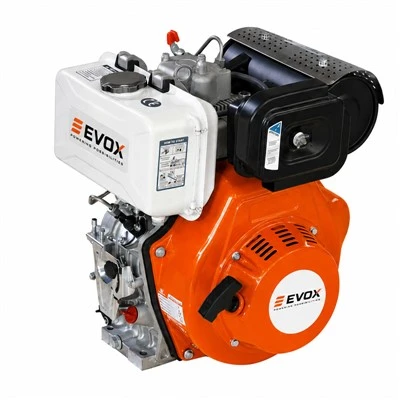
Now, the next big factor that impacts maximum pressure: the diesel engine that powers the pump. You can’t put a tiny 10-horsepower engine on a pump built to handle 40,000 PSI—there’s not enough torque to drive the plunger hard enough to reach that pressure. Let’s use an example I bring up all the time with my customers. Last quarter, a restoration contractor came to me asking for a pump to remove lead-based paint from a 100-year-old steel bridge. They initially asked for a 20,000 PSI unit, but after talking through their job details, I suggested a 12,000 PSI pump. Why? Because the area they were working in was a residential neighborhood, and 20,000 PSI is overkill for paint stripping—it would require them to wear full face shields and protective suits, and it could damage the underlying steel if they held the nozzle in one spot too long. Plus, the engine for a 20,000 PSI pump is a 75-horsepower diesel unit, which is heavy, hard to transport to a bridge site, and uses way more fuel than they needed. The 12,000 PSI pump we supplied had a 40-horsepower engine, was easy to haul on a small flatbed, and did the job in half the time they’d projected for their initial wrong-order pump.
There’s another point here about engine sizing: if you hook a pump up to an engine that’s too powerful, you can actually damage the pump by forcing it to run beyond its rated maximum pressure. All the pumps I supply come with a built-in pressure relief valve, a safety feature that kicks in if the pressure gets too high, diverting water back into the system to prevent blowouts or broken parts. But that valve is calibrated for the pump’s specific maximum pressure, so matching engine power to pump capacity is non-negotiable.
Now, let’s talk about the myths I hear all the time from new customers. First myth: “Higher pressure is always better.” I can’t tell you how many times I’ve had a customer buy a high-pressure pump and then underutilize it, because their job doesn’t need that power. A 10,000 PSI pump for cleaning barn stalls is like using a sledgehammer to hang a picture—overkill, and more expensive to buy, operate, and maintain. The second myth: “Diesel pumps can hit any pressure you want.” No, that’s not true. Every pump has a hard maximum pressure rating, set by its manufacturer during testing. You can adjust the pressure down (that’s easy, using a pressure regulator on the pump), but you can’t adjust it up. Trying to force a pump beyond its maximum rated pressure will lead to premature seal failure, plunger damage, or even a catastrophic pump breakdown mid-job. I’ve seen a customer try to crank a 10,000 PSI pump to 12,000 PSI to speed up concrete form cleaning, and within 20 minutes, the seal on the pump head blew, spraying high-pressure water that dented a steel wall and soaked three of his workers. That’s the kind of mistake that costs people time, money, and injury—all because they didn’t understand their pump’s limits.
Another thing to keep in mind: maximum pressure isn’t just a static number. It can change over time based on how you maintain your pump. I tell all my customers that regular maintenance is the key to keeping their pump operating at its rated maximum pressure. If you don’t change the hydraulic oil in the pump head every 500 hours, if you let dirt and debris build up on the plunger, if you ignore small leaks in the seals, the pump’s efficiency drops, and the maximum pressure it can reach goes down. Last year, a farmer I supply had a pump that was supposed to hit 8,000 PSI, but he was only getting 6,000 PSI. Turns out, he’d been running it on cheap, dirty oil and never cleaned the water intake filter. After we did a full service—new oil, replaced worn seals, cleaned the intake—his pump was back to hitting 7,800 PSI, almost its full rated capacity. That’s a lesson I carry with me every day: a pump’s performance isn’t just about its rated specs, it’s about how you take care of it.
Now, let’s get back to the numbers, because that’s what everyone cares about. To answer the original question: the maximum pressure a diesel high-pressure water pump can reach ranges from as low as 1,000 PSI for small, portable pumps used for light cleaning, up to 40,000 PSI for heavy-duty, custom plunger pumps built for abrasive industrial applications. The pumps I stock for general industrial, construction, and agricultural use top out at 15,000 PSI, which is more than enough for 95% of the jobs my customers bring to me. If you need something higher than that, I can work with my manufacturing partners to build a custom unit up to 40,000 PSI, but that’s for specific, niche tasks like thick concrete cutting, heavy industrial paint stripping, or oil well fracking.
I’ll also add a note about flow rate, because it’s tied to pressure and a lot of new customers mix the two up. Flow rate is how much water the pump moves per minute, measured in gallons per minute (GPM). A pump can have high pressure but low flow, or low pressure but high flow, and which one you need depends on your job. For example, if you’re cleaning a large parking lot, you want a pump with high flow (like 10 GPM) at moderate pressure (3,000 PSI) because you can cover more ground faster. If you’re removing rust from a small steel beam, you want high pressure (10,000 PSI) at low flow (2 GPM) because you don’t need a lot of water to do a precise job. It’s not either/or, but understanding both pressure and flow is key to picking the right pump.
Over the 12 years I’ve been supplying these pumps, I’ve learned that the best customer isn’t the one who buys the most expensive pump—it’s the one who comes to me ready to talk about their actual job, not just a maximum pressure number. Last month, a small construction company owner called me panicking because he’d bought a used 15,000 PSI pump for a job stripping old roof coatings, and he was struggling to control it, plus it was guzzling fuel. I helped him pick up a 6,000 PSI pump, which was perfect for his roof work, and he told me it cut his fuel costs by 70% and let him work faster because it was easier to control. That’s the kind of value I care about, more than selling a pump that’s way too powerful for someone’s needs.
If you’re in the market for a diesel high-pressure water pump, whether for construction, cleaning, agriculture, or any other use, don’t just ask for the highest pressure number you can find. Ask questions: what’s the maximum pressure I actually need for my job? What engine size will work for that pump, and is it easy to transport? What kind of maintenance does it need, and how often? Those are the questions that will help you get a pump that works for you, not against you.

I’ve seen too many people waste money on overkill pumps, or end up with underpowered ones that can’t get their work done. I’m here to help you cut through the noise. If you’re ready to talk about your pump needs, or have more questions about maximum pressure, pump specs, or maintenance, reach out to my team. We’ll walk through your job, help you pick the right pump, and make sure you have all the information you need to get it done safely and efficiently.
Diesel Engine References:
- Hydraulic Institute. (2021). Centrifugal and Positive Displacement Pump Design and Application Standards.
- National Association of Water Companies. (2022). Industrial High-Pressure Water Pump Safety and Performance Guidelines.
- Fluid Power Society. (2020). Reciprocating Plunger Pump Pressure Rating and Maintenance Manual.
- Occupational Safety and Health Administration (OSHA). (2019). Safety Guidelines for High-Pressure Water Pump Operation in Industrial Settings.
Evoxpower Technology
Evoxpower Technology is one of the most professional diesel high pressure water pump manufacturers and suppliers in China, featured by quality products and good service. Please rest assured to buy the newest diesel high pressure water pump in stock here and get pricelist from our factory. Contact us for customized service and OEM service.
Address: 11 Fortune Avenue, Yubei District, Chongqing, China
E-mail: stephen@allrightpower.com
WebSite: https://www.evoxpower.com/
