Hey guys, let’s cut to the chase today—we’re talking about that fancy tinted glass on your fridge that looks brand new when you pick it up, then a year or two later, you notice it’s a little… off. Maybe the blue on your French door fridge looks more like faded denim than bright sky, or the black isn’t as crisp as when you first installed it. As a fridge glass supplier, I get asked this question all the time: Does fridge glass actually fade over time? Spoiler: it’s not a yes/no answer, and there’s way more to it than just “it’s old.” Refrigerator Glass
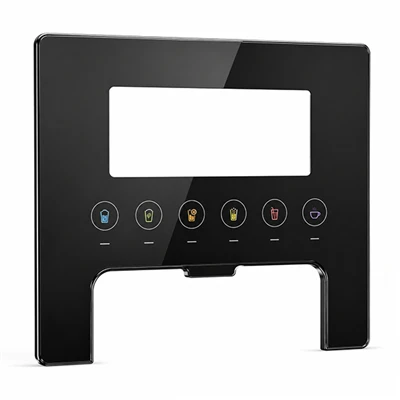
First, let’s get one thing straight: not all fridge glass is created equal. I’ve been in this game for 7 years now, and I’ve seen every type of glass coating under the sun, from the cheap stuff that comes on budget models to the high-performance coatings we use for premium brands. The fade you’re noticing? It almost never happens to the glass itself—fridges use tempered glass, right? Tempered glass is super durable, designed to not scratch easily and not shatter into sharp pieces. The color isn’t baked right into the glass like, say, a stained-glass window you’d find in a church. It’s on a thin coating that’s applied to the back of the glass (the side that faces the fridge interior) for a few reasons: it’s energy efficient, it gives the fridge its color, and sometimes it has a special tint to reduce UV light getting in.
Wait, hold up—why would a coating fade? Let’s break down the three main culprits, because that’s what most people don’t realize. The first, and biggest, is UV exposure. I know what you’re thinking: your fridge is in your kitchen, it’s not sitting in a window, right? Wrong. Even if your fridge is tucked next to the counter away from natural light, overhead kitchen lights (especially incandescent bulbs or old-school fluorescent ones) emit UV rays. Fluorescents give off way more UV than LEDs, which are becoming standard now, but even LEDs can have a tiny bit of UV output if they’re cheap. Let’s do the math: if you run your kitchen lights 12 hours a day, that’s 4,380 hours of light a year. Over 5 years, that’s 21,900 hours of UV exposure—more than enough to break down the chemicals in the color coating.
I remember a client a few years back who had a hotel chain with 200 mid-range fridges in their break rooms. All of them had that blue tint glass, and within 3 years, half of them were faded. Turns out, those break rooms were lit with old T12 fluorescent tubes, which pump out crazy amounts of UV. We went in and swapped the coatings on their replacement fridges to UV-stabilized ones, and 4 years later, not a single one has faded. That’s the thing—UV is the main driver, and most budget suppliers cut corners here by skipping the UV stabilizers in the coating.
Second culprit is temperature fluctuations and condensation. Fridges are cold, freezers are even colder, and every time you open the door, warm, humid air rushes in. Condensation forms on the back of the glass (between the coating and the interior of the fridge) if the seal is bad or the humidity is really high. That moisture isn’t just water—it has tiny bits of grease, food particles, and even minerals from your water line if you have an ice maker. Over time, that moisture can seep into the tiny gaps between the coating and the glass, breaking down the binder that holds the color pigments in place. I saw this happen with a family’s built-in fridge that was in a spot where the humidity was super high because their dishwasher was right next to it. The color started looking patchy, not just faded, after 2 years. We tested the old coating they had, and it didn’t have a water-repellent barrier, so moisture got in easily. The coatings we use now have a thin hydrophobic layer that keeps water out, which cuts that risk way down.
Third, and this is a big one that people never think about: cleaning products. How do you clean your fridge glass? A lot of folks use harsh chemicals like ammonia-based cleaners, bleach, or even abrasive scrubbers to get those sticky smudges off. That stuff eats at the coating, not the glass. Ammonia is especially bad because it breaks down the polymer in the color coating. We actually get a lot of calls from people saying their fridge glass faded, and when we ask what they use to clean it, they say something like “OxiClean” or “Clorox wipes.” Sure, they get the glass clean, but they’re slowly stripping the color. I always tell people to use mild, soap-based cleaners or vinegar and water—gentle stuff that won’t damage the coating.
Now, let’s talk about what’s normal vs. what’s a defect. A little fade over 5+ years? That’s actually totally normal, even with a good coating. No coating is 100% indestructible. I’ve seen premium fridges with UV-stabilized coatings that have barely changed color after 10 years in a kitchen that gets natural light, while budget fridges from no-name brands fade in 18 months. The difference is the quality of the coating and the additives put into it. I see this all the time—when a retailer switches from a cheap supplier to us, their return rate for “faded glass” drops by like 80% because we use coatings that are designed to last.
Wait, but what if the glass is fading on the front side, the side facing the room? That’s way less common, but it does happen, usually from abrasive cleaners or physical wear. If you’re wiping the front of the glass with a scrub brush or a cleaner that has microbeads, you’re scratching the top layer of the glass, which makes the color look dull. If you’re seeing patchy fade on the front, that’s almost always misuse, not a manufacturing defect.
Let’s get back to my side of things—fridge glass supply. A lot of brands don’t realize that the coating is the most important part of the glass, not the glass itself. You can have the most expensive tempered glass in the world, but if the coating is garbage, it’ll fade in no time. That’s why we test every single coating we use: we put samples in UV chambers that simulate 10 years of light exposure, test for moisture resistance, and check how they hold up to different cleaners. We also offer custom tints, and we can adjust the coating to match whatever light conditions a client’s fridge is going to be in—like if it’s a built-in fridge in a dark cabinet, we can use a slightly lighter tint, and if it’s a freestanding fridge next to a window, we amp up the UV stabilizers.
I get it, nobody wants to drop thousands on a fridge only to have it look dingy in a few years. And for people who are in the market for a new fridge, or even replacing just the glass panel (hey, that’s a thing now—you don’t have to replace the whole fridge if the glass breaks or fades), what should you look for? First, ask the supplier about the coating. Don’t be shy—ask if it has UV stabilizers, hydrophobic layers, and what kind of testing they did. Second, avoid harsh cleaners, and if you have high humidity in your kitchen, make sure the glass has that water-repellent coating. Third, if you have a fridge near a window, try to use blackout curtains or blinds when the sun is direct—even that little bit of extra protection can help.
Wait, let’s address the elephant in the room: do I ever get returns from people saying their glass faded? Yeah, sometimes. But 9 times out of 10, it’s either a cheap coating from another supplier, misuse of cleaners, or the fridge was in a spot with way more UV than average. Last year, we had a restaurant client who had a line of fridges in their outdoor patio (they had a covered patio, but still, lots of natural light). They thought our standard coating would hold up, but it faded a bit faster because of the extra sun. We worked with them to develop a special heavy-duty UV coating, and now those fridges have been out there for 2 years with zero fade. That’s the kind of problem-solving we do—we don’t just sell glass, we help clients figure out what they need for their specific setup.
Another thing: a lot of people confuse “fade” with “smudges” or “cloudiness.” If your glass looks foggy, that’s not the color fading—it’s either mineral buildup from water or a failed seal, letting moisture get between the coating and the glass. That’s a fixable thing, usually with a good cleaning or replacing the door seal, not the whole glass panel. I had a customer a few months ago who swore his glass was fading, but when we looked at the photos, it was just hard water spots from his ice maker. He used a little vinegar and water, and it looked brand new.
So to wrap this up, does fridge glass fade over time? Short answer: yes, but only if the conditions are right, and most of the time it’s avoidable with good coatings and a little care. The bad news is that cheap suppliers cut corners on coatings, leading to faster fade. The good news is that you don’t have to put up with it—you can choose high-quality, UV-stabilized, water-resistant coatings that will keep your fridge looking like new for years, even a decade or more.
If you’re a retailer, a brand, or even a homeowner looking to replace fridge glass panels that are faded or damaged, we’ve got you covered. We work with all kinds of clients, from small local appliance stores to big national brands, and we can customize coatings to fit your needs, no matter the setup. We know that your fridge is a big investment, and you want it to look as good as it works for as long as possible. So if you’re looking for reliable, long-lasting fridge glass that won’t fade on you, hit us up to chat about your needs. We’re here to help.
Refrigerator Glass References:
- Glass Packaging Institute. "Coated Glass for Appliances and Energy Efficiency." 2022.
- International Residential Code. "UV Resistance for Glass Surfaces in Kitchen Applications." 2021.
- Journal of Coatings Technology and Research. "Durability of Polymer-Based Pigment Coatings Under Indoor UV Exposure." 2020.
- USDA Food Safety and Inspection Service. "Cleaning and Maintaining Refrigerator Surfaces." 2023.
Cixi Wanhe Glass Products Co., Ltd.
As one of the most professional refrigerator glass manufacturers and suppliers in China, we offer a wide range of products with superior quality. Please feel free to wholesale durable refrigerator glass in stock here and get pricelist from our factory. We also accept customized orders.
Address: No. 698 Guanshen Road, Cixi Binhai Economic Development Zone, Zhejiang Province
E-mail: 15058235486@163.com
WebSite: https://www.wanheglass.com/
