Alright, let’s cut to the chase—if you’re here because you’re researching where LNG stations actually pop up, not just what a random textbook says, you’re in the right spot. I’ve been part of the LNG station supply game for over a decade now, so I’ve seen way too many clients waste money installing stations in the middle of nowhere and then wonder why they don’t get any trucks rolling in. Let me break this down like I’d explain it over a coffee (or a cold beer, if that’s more your vibe) without all the jargon. LNG Stations
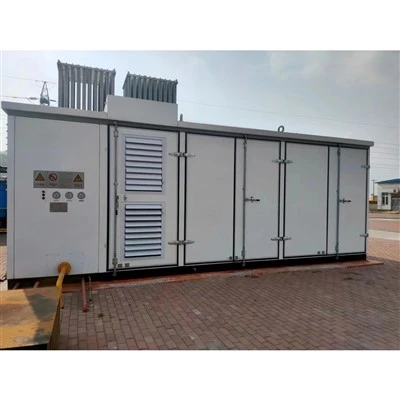
First off, let’s get one thing straight: LNG isn’t for passenger cars. If you’re thinking “where do I fill up my Tesla or my Honda Civic?” stop right there. LNG is for heavy-duty transport—long-haul trucks, busses, even some industrial stuff like construction equipment or cargo ships that need to refuel near ports. So the location of an LNG station isn’t random; it’s all about where those vehicles are already going.
Start with the big one: major interstate and highway corridors. I’m talking about the big cross-country routes, like I-95 up the East Coast, I-80 across the Midwest, I-10 through the South and West. These are the arteries where long-haul truckers drive 10+ hours a day, crossing state lines, hauling freight from warehouses to ports or distribution centers. You won’t find an LNG station on a backroad in a small town with 500 people—unless that town just happens to be a major freight hub. We’ve supplied stations along these corridors for years, and the ones that make bank are usually every 50 to 100 miles apart. Why? Because that’s about how far a long-haul LNG truck can go on a full tank—roughly 700 to 800 miles, so spacing them that way means a driver never has to detour more than an hour out of their way to refuel. Don’t even try to put one every 200 miles; you’ll be waiting forever for drivers to show up.
Next, port and rail yards. Ports are massive—places like Los Angeles/Long Beach, Savannah, Houston, New York/New Jersey. All those cargo ships unload containers, which get loaded onto trucks to be hauled to warehouses, or onto trains to go cross-country. Those trucks can’t just drive 50 miles to a regular gas station—they need a place right there at the port to refuel between runs. Same with rail yards: trains might switch to LNG for some routes now, and the trucks that pick up rail cargo need a nearby LNG station too. Last year, we installed a station right next to the Port of Houston, and within three months, it was running 18 hours a day. The truckers loved it because they didn’t have to waste time driving off-site, and the port loved it because it cut down on idling (which is better for air quality, and saves them money on fuel too).
Industrial zones and distribution centers go hand in hand with that. Think about big warehouse complexes—Amazon, Walmart, Kroger, whatever. These places have fleets of 50, 100, even 1,000 trucks moving cargo in and out 24/7. If the warehouse is in a spot where those trucks have to refuel halfway, or if the company is switching their entire fleet to LNG (which they’re doing because it’s cheaper than diesel and better for emissions), you need an LNG station right there on-site or super close. We worked with a grocery distributor in Chicago a couple years ago—they had a whole fleet of LNG delivery trucks, and putting the station 2 miles from their main warehouse meant their drivers never had to leave the compound to fill up. That’s the kind of location that makes sense, not some random spot with no nearby businesses.
Then there’s something a lot of people overlook: border crossings. The US has borders with Mexico and Canada, and a ton of freight crosses those every day via heavy-duty trucks. If you’re a trucker driving from Detroit to Toronto, or from San Diego to Mexico City, you need a place to refuel right at the border so you don’t have to drive all the way into a city first. A few years back, we supplied a station just 1 mile from the San Diego-Tijuana border, and within a year, it was the go-to spot for cross-border truckers. They didn’t have to deal with traffic in downtown San Diego, and they could fill up right before heading back across. That’s a goldmine spot, honestly—if a border crossing handles thousands of trucks a week, an LNG station there will pay for itself fast.
Wait, I should also talk about what doesn’t work. Let’s get real here: small towns with no heavy-duty traffic, residential areas, or places where the only nearby traffic is passenger cars. I once had a client call me up, super excited because they found a perfect plot of land “right off a highway” in a town with a population of 2,000. Turns out, that highway only had 200 trucks a day, most of them local pickup trucks. We tried to warn them, but they went ahead anyway. Six months later, they were begging us to come move the station because they were only getting 2 fills a day. Don’t do that. LNG stations aren’t convenience stores—they need a steady, constant flow of heavy-duty vehicles, not a handful of locals with weirdly modified trucks.
Another thing: access to utilities. A lot of people forget that LNG stations need power to compress, store, and dispense the fuel. You can’t just plop one down in a field with no electricity or water (wait, actually, you can, but it’s way more expensive to install generators and water lines, and that cost gets passed on to you). That’s why you’ll almost never see an LNG station in a remote area unless it’s a tiny satellite station for emergency use, but even then, we try to get them hooked up to the grid if possible. When we work with clients, we always check utility access first—no point even looking at a spot if it’s going to cost $100k just to get power there.
Also, regulations. I know it’s not the most fun topic, but it’s non-negotiable. A lot of cities and states have strict rules about where you can put LNG stations because they’re flammable (though modern LNG stations are way safer than people think, thanks to double-walled tanks and leak detection systems). You can’t put one within 50 feet of a school, or a hospital, or a residential neighborhood in most areas. So that’s another big filter—we have to make sure the spot meets all local fire codes, zoning laws, and environmental regulations. No cutting corners here; if you try to put a station in a restricted zone, you’ll get shut down before you even turn on the pumps.
Wait, let’s circle back to what I do—supplying LNG stations. A lot of my clients come to me and say “we want a station, where should we put it?” And my first question isn’t “how big do you want it?” It’s “where’s your traffic?” Because that’s the whole point. We’ve installed stations that serve 50 trucks a day up to 500 trucks a day, and every single one that’s profitable is in a spot where the heavy-duty traffic is already there. We work with you to do a site assessment—we look at nearby highway counts, port volumes, fleet sizes, border traffic—so you don’t waste your money on a bad location.
Let me give you an example of a good location vs. a bad one. Good: I-75 in Georgia, halfway between Atlanta and Chattanooga, right next to a major truck stop that serves 300 long-haul trucks a day. We installed a 2-pump LNG station there two years ago, and now it’s at 95% capacity most days. Bad: A backroad in rural Ohio, 10 miles from the nearest highway, where the only traffic is farm equipment. We had a client try that last year, and they closed it after 8 months because they only had 1 or 2 fills a day. It’s not that LNG doesn’t work—it’s that they put it in the wrong spot.
Another thing I’ve noticed: more and more, LNG stations are popping up near other fuel stations that already serve truckers. Like, if there’s a Pilot or Love’s truck stop on a major highway, putting an LNG station right next to it makes sense. The truckers already stop there for food, restrooms, diesel—they’ll gladly pull over for LNG too. It’s all about convenience for the driver. If they have to go out of their way for fuel, they won’t do it. But if it’s right where they’re already stopping, that’s a no-brainer.
Oh, and ports—like I said earlier. We’ve done stations at the Port of Savannah, the Port of LA, Port of Houston, and every single one of them is a hit. Because those ports are moving millions of tons of cargo every year, and the trucks that move that cargo need LNG to stay on the road. Plus, a lot of these ports are pushing to reduce emissions, so switching their fleets to LNG is a big part of that, and they need the stations to make that happen.
Now, if you’re reading this and you’re looking to get an LNG station set up, let’s cut to the chase. The location is the make-or-break factor. You can have the best, most efficient station on the market, but if it’s in a spot with no traffic, it’ll fail. That’s where I come in. I’ve been doing this for long enough to know exactly what to look for, I’ve got relationships with zoning officials in most states, and I can help you pick a spot that’s actually going to turn a profit. No fancy sales pitches, no overpriced equipment—just real, practical advice from someone who’s been in the trenches.
Wait, one last thing I should mention: future traffic. Don’t just look at today’s numbers. Look at what’s coming. Is a new warehouse being built nearby? Is a port expanding? Is a major highway widening? If you invest in an LNG station in a spot that’s going to get more traffic in the next 5 years, you’ll be ahead of the game. We’ve had clients that took a chance on a spot that was “quiet” now, but a new distribution center was moving in, and now they’re making twice as much as they projected. It’s about seeing the big picture, not just the numbers right now.
At the end of the day, LNG stations aren’t like coffee shops or grocery stores. They’re specialized for heavy-duty transport, so their locations have to be specialized too. They need steady heavy traffic, easy access for truckers, proximity to industrial hubs or ports, good utility access, and compliance with local rules. If you get that right, your station will run smoothly, you’ll get plenty of customers, and you’ll make money. Mess up the location, and you’ll be stuck with a big piece of equipment that’s just sitting there collecting dust.
If you’re serious about getting an LNG station set up and you need help figuring out where to put it, hit me up. I don’t do hard sells, I don’t use fancy jargon, I just give you the straight scoop on what works and what doesn’t. We can walk through your options, look at site data, and make sure you’re making a decision that’s going to pay off. Don’t make the mistake so many new operators make—putting a station in the wrong spot. Let’s get it right the first time.
CNG Standard Station REFERENCES
- U.S. Energy Information Administration. (2022). LNG Transportation Fuel Market Trends.
- American Trucking Associations. (2023). Heavy-Duty Alternative Fuel Infrastructure Report.
- National Fire Protection Association. (2021). LNG Station Zoning and Safety Standards.
Qingdao Lenado Intelligent Equipment Co., Ltd.
Qingdao Lenado Intelligent Equipment Co., Ltd. is one of the most experienced LNG stations manufacturers and suppliers in China. We have world-leading production equipment and strong manufacturing capabilities. Please rest assured to wholesale bulk customized LNG stations from our factory.
Address:
E-mail: genkegasstation@163.com
WebSite: https://www.cnggasstation.com/
