Hey there! I’m in the business of supplying surgical power systems, and today I wanna chat about how these nifty gadgets work in laparoscopic surgeries. Laparoscopic surgeries have come a long way, and surgical power systems play a huge role in making them safer and more efficient. Surgical Power Systems
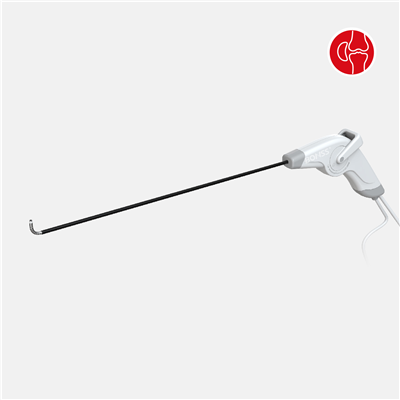
First off, let’s get a bit of background on laparoscopic surgeries. You know, instead of making those big, open cuts, surgeons use small incisions and insert a laparoscope, which is like a tiny camera. This gives them a clear view of the inside of the body on a monitor. It’s less invasive, which means less pain, shorter hospital stays, and quicker recovery times for patients. But to do all the cutting, dissecting, and coagulating inside the body, they need the right tools, and that’s where surgical power systems come in.
So, how do these systems actually work? Well, there are a few different types of surgical power systems commonly used in laparoscopic surgeries, and each has its own way of doing things.
One of the most common types is the electrosurgical unit. This thing uses electrical energy to cut and coagulate tissue. The basic principle is pretty simple. You’ve got a generator that produces an electrical current. The current is then sent through a special instrument, like a bipolar or monopolar electrode. When the electrode touches the tissue, the electrical energy heats up the tissue, causing it to either cut or coagulate.
Let’s talk about bipolar and monopolar electrodes for a sec. With a bipolar electrode, the electrical current flows between two tips of the instrument. This is great for precise work because the current is concentrated between those two tips. It’s like a little electrical sandwich, and the tissue in the middle gets zapped. Bipolar electrodes are often used for things like sealing blood vessels or cutting through small areas of tissue.
On the other hand, a monopolar electrode has one active tip, and the return electrode is placed on the patient’s body, usually on the thigh or back. The electrical current flows from the active tip through the tissue and then back to the return electrode. Monopolar electrodes can be used for larger areas of cutting and coagulation, but they need to be used carefully because the current can spread through the body.
Another type of surgical power system is the ultrasonic surgical device. This one uses high – frequency ultrasonic vibrations to cut and coagulate tissue. The device has a handpiece with a titanium blade that vibrates at an incredibly high frequency, usually around 55,500 times per second. When the blade touches the tissue, the vibrations cause the water molecules in the tissue to vaporize. This creates a cutting effect, and at the same time, the proteins in the tissue are denatured, which helps with coagulation.
Ultrasonic devices are really good for cutting through soft tissue, like the liver or the spleen. They’re also great because they produce less smoke and charring compared to electrosurgical units. This means better visibility for the surgeon during the operation.
Then there’s the harmonic scalpel, which is a type of ultrasonic device. It’s got a special blade that can cut and coagulate at the same time. The blade vibrates at a specific frequency that causes the collagen in the tissue to denature and form a seal. This is super useful for cutting through blood vessels and other tissues without a lot of bleeding.
One more type of surgical power system is the laser system. Lasers use focused light energy to cut and vaporize tissue. There are different types of lasers, like CO2 lasers and Nd:YAG lasers, and each has its own properties. CO2 lasers are great for cutting through soft tissue because they’re absorbed by water in the tissue. When the laser hits the tissue, the water heats up and vaporizes, creating a cutting effect. Nd:YAG lasers, on the other hand, can penetrate deeper into the tissue and are often used for treating tumors or for coagulation in deeper tissues.
Now, let’s talk about how these surgical power systems are controlled during a laparoscopic surgery. Surgeons have a lot of control over the settings of these systems. For example, with an electrosurgical unit, they can adjust the power output. If they’re doing a delicate procedure, they might use a lower power setting to avoid damaging surrounding tissue. If they need to cut through a thicker layer of tissue, they can crank up the power.
The same goes for ultrasonic devices. Surgeons can adjust the amplitude of the vibrations. A higher amplitude means more cutting power, while a lower amplitude is better for more precise work.
In addition to the power settings, surgeons also have control over the mode of operation. For example, an electrosurgical unit can be set to cut mode, coagulation mode, or a combination of both. In cut mode, the electrical current is set to cut through the tissue cleanly. In coagulation mode, the current is adjusted to seal blood vessels and stop bleeding.
Now, as a supplier of surgical power systems, I know how important it is to have reliable and high – quality equipment. Our systems are designed to be easy to use, with intuitive controls that allow surgeons to quickly adjust the settings. We also make sure that our systems are safe. They’ve got built – in safety features to prevent things like electrical shocks or overheating.
For example, our electrosurgical units have a system that monitors the electrical current and automatically shuts off if there’s a problem. Our ultrasonic devices are designed to be ergonomic, so they’re comfortable for the surgeon to hold during long surgeries.
We also offer a range of accessories for our surgical power systems. For example, we’ve got different types of electrodes for electrosurgical units, each designed for a specific type of procedure. We’ve also got replacement blades for ultrasonic devices, so surgeons can keep their equipment in top shape.
If you’re in the market for surgical power systems for laparoscopic surgeries, we’d love to have a chat with you. Whether you’re a hospital looking to upgrade your equipment or a surgical center starting from scratch, we can provide you with the right solutions. Our team of experts can help you choose the best system for your needs and can also offer training and support.
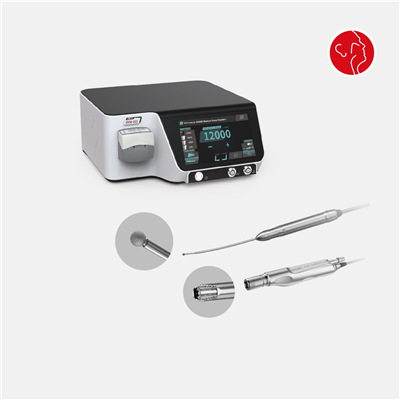
So, if you’re interested in learning more about our surgical power systems or want to discuss a potential purchase, don’t hesitate to reach out. We’re here to make your laparoscopic surgeries as smooth and successful as possible.
UBE Surgical Power Systems References:
- Smith, J. (2018). Principles of Laparoscopic Surgery. Surgical Press.
- Johnson, A. (2019). Surgical Power Systems: A Comprehensive Guide. Medical Equipment Journal.
- Brown, C. (2020). Advances in Laparoscopic Surgical Techniques. Surgical Innovation Review.
Jiangsu Bonss Medical Technology Co., Ltd.
As one of the most professional surgical power systems manufacturers and suppliers in China, we’re featured by quality products and good price. Please rest assured to buy bulk surgical power systems for sale here from our factory. Customized orders are welcome.
Address: Building #7,No.898,China Medical City Avenue, Haling District, Taizhou City.Jiangsu P.R. China
E-mail: inquiry@plasma-surgical.com
WebSite: https://www.bonssmedical.com/
