Hey there! I’m a supplier of rigid pallet boxes, and today I wanna chat about the heat resistance of these bad boys. Rigid pallet boxes are super handy in all sorts of industries, from food and beverage to pharmaceuticals, and understanding their heat resistance is crucial. Rigid Pallet Box
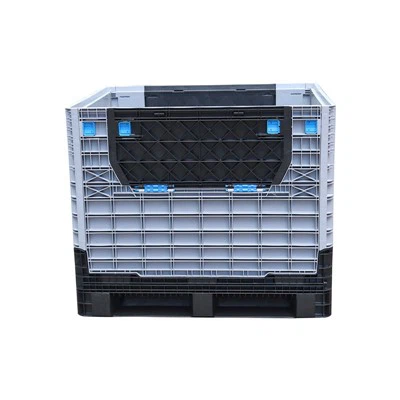
Let’s start with what heat resistance actually means for a rigid pallet box. Heat resistance refers to the ability of the box to withstand high temperatures without losing its structural integrity, shape, or functionality. When a pallet box is exposed to heat, it can go through a bunch of changes. For example, if it gets too hot, the plastic material (which is commonly used in rigid pallet boxes) might start to soften, warp, or even melt.
Now, different materials used in rigid pallet boxes have different heat resistance levels. Most of the time, we use high – density polyethylene (HDPE) or polypropylene (PP) to make these boxes. HDPE is known for its decent heat resistance. It can usually handle temperatures up to around 120 – 130 degrees Celsius (248 – 266 degrees Fahrenheit) before it starts to deform. PP, on the other hand, has a slightly higher heat resistance, with a melting point of about 160 – 170 degrees Celsius (320 – 338 degrees Fahrenheit).
Why does heat resistance matter? Well, in industries like food processing, products often need to be stored or transported at high temperatures. For instance, if you’re shipping hot – filled food items, the pallet box needs to be able to handle the heat without falling apart. In the pharmaceutical industry, some drugs are stored at elevated temperatures during the manufacturing process, and the pallet boxes used to transport them must be heat – resistant to ensure the safety and quality of the products.
But it’s not just about the material. The design of the rigid pallet box also plays a role in its heat resistance. A well – designed box with proper ventilation can dissipate heat more effectively. For example, if a box has small holes or vents on the sides, it allows hot air to escape, reducing the internal temperature and preventing overheating.
Let’s talk about some real – world scenarios. Say you’re in the bakery business. You’ve just baked a batch of fresh bread, and you need to transport it from the oven to the delivery truck. The bread is still hot, and if you use a pallet box with poor heat resistance, it might start to warp or crack under the heat. This could lead to the bread getting damaged and the box becoming unusable.
On the other hand, if you use a high – quality rigid pallet box with good heat resistance, it can handle the hot bread without any issues. The box will maintain its shape, and your bread will stay safe and sound during transportation.
Another scenario is in the chemical industry. Some chemicals need to be stored at high temperatures for certain reactions. The rigid pallet boxes used to store these chemicals must be able to withstand the heat without reacting with the chemicals or breaking down.
Now, how can you test the heat resistance of a rigid pallet box? One common method is the heat deflection test. In this test, a sample of the box material is placed under a specific load and heated gradually. The temperature at which the material starts to deflect a certain amount is recorded. This gives an idea of how well the material can handle heat under stress.
There are also other factors that can affect the heat resistance of a rigid pallet box. For example, the thickness of the material matters. A thicker box is generally more heat – resistant than a thinner one because it has more mass to absorb and dissipate heat. The color of the box can also play a role. Dark – colored boxes tend to absorb more heat than light – colored ones, which means they might heat up faster and be more prone to deformation.
As a supplier, I always recommend that my customers consider their specific needs when choosing a rigid pallet box. If you’re dealing with high – temperature products, you need to make sure the box you choose has the right heat resistance. You can also ask for samples and do your own tests to see how the box performs under different heat conditions.
In conclusion, the heat resistance of a rigid pallet box is a crucial factor to consider, especially in industries where high – temperature products are involved. It’s not just about the material, but also the design and other factors like thickness and color. By understanding these aspects, you can make an informed decision when choosing a rigid pallet box for your business.
If you’re interested in learning more about our rigid pallet boxes and their heat resistance, or if you’re looking to make a purchase, don’t hesitate to reach out. We’re here to help you find the perfect solution for your needs.
Folding Crate References:
- "Plastics in Packaging: Properties and Applications" by John W. Murphy
- "Materials Science for Engineers" by Donald R. Askeland
Shanghai Qusheng Plastics Co., Ltd.
As one of the leading rigid pallet box manufacturers and suppliers in China, we have world-leading production equipment and strong manufacturing capabilities. Please rest assured to wholesale customized rigid pallet box from our factory. For quotation, contact us now.
Address: No.85 Hengtang Road, Huaqiao Town, Kunshan City, Jiangsu Province
E-mail: Totepallet-inquiry@plastic-crate.com
WebSite: https://www.totepallet.com/
