Hey everyone, thanks for stopping by! I’m Jake, and I’ve been running this auxiliary equipment supply shop for almost a decade now. Most days, I’m out on the floor troubleshooting, or on the phone with guys who just got burned from cutting corners on their gear—badly. Today we’re talking about something that comes up all the time in my calls: the wild, dangerous, and expensive stuff that happens when you don’t treat auxiliary equipment like the crucial (and expensive) pieces it is. This isn’t just “remember to do your job”—it’s the stuff that makes small shops fold, workers get hurt, and entire production lines grind to a dead stop. Let’s dive in, yeah? Auxiliary Equipments
First off, let’s get one thing straight: auxiliary equipment isn’t “extra.” That’s a myth I hear all the time from new shop owners. Your main CNC lathe or press is the star of the show, but your air compressors, coolant pumps, dust extractors, and even those little workholding clamps? They’re the understudies that hold the whole show together. Mess with how you use ‘em, and the whole production stage collapses. I saw it last year with a custom metal fab shop I work with. They had a beat-up air compressor that was running 24/7, and they never cleaned the intake filters—said it “wasn’t worth the 10 minutes every week.” Turns out, the filter got so clogged with metal shavings that the compressor overheated so bad the head cracked. By the time they noticed, they’d lost 36 hours of production, had to drop $4,000 on a replacement head, and missed a huge deadline for a local construction client. The fine they paid? Another $15k. All because they skipped one tiny maintenance step on a piece of auxiliary gear. That’s the kind of “small mistake” that puts people out of business fast.
Now, let’s talk about safety. This is the big one that keeps me up at night. I’ve been in shops where guys use a forklift attachment that’s meant for pallets to lift 800lb steel beams—says it’s “close enough.” Or they ignore the guard on a coolant pump, because “it gets in the way when I’m clearing clogs.” Last year, a technician at a small automotive parts plant got his sleeve caught in an unguarded conveyor belt (that’s auxiliary equipment, for the record). The belt was running because he didn’t lock out the power before adjusting it—something his supervisor told him to skip “to save time on the line.” He lost half his arm. The plant paid out a $2.7M settlement, got hit with OSHA fines totaling $187k, and had to shut down two production lines for six weeks while they retooled everything. And that’s not even the worst part: the guy’s life changed forever. All because they thought using auxiliary equipment “close enough” was fine. Let’s be real—auxiliary gear is designed for specific load limits, specific power settings, specific use cases. Ignore that, and you’re not just risking a fender bender—you’re risking human life, and a future you can’t get back.
Wait, I know what some of you are thinking: “But we just need this gear to do a quick job. We don’t have time to check every setting.” Yeah, I get that. I’ve worked with customers in a pinch—orders piling up, deadlines breathing down your neck, it’s tempting to cut corners. But here’s the thing: improper use of auxiliary equipment doesn’t just cause big, dramatic disasters. It’s also the quiet, steady drain on your profits that you don’t notice until it’s too late. For example, I had a customer a few months back who was running a small woodworking shop. They used a dust extractor (super important for keeping their air clean, right?) but only emptied the bin once a week—said emptying it daily “slowed down their workflow.” Turns out, the dust buildup in the extractor’s filter made it work 30% harder than it was designed to. Their electricity bill went up $1,200 that quarter, and the filter wore out three months early—another $800 replacement. Not to mention, the dust buildup was a fire hazard, and the local fire marshal gave them a warning that a repeat would cost $10k in fines. That’s $2k in extra costs, plus a safety warning, all because they skipped one tiny, daily step on their dust extractor.
Another thing I see all the time: people using the wrong auxiliary equipment for the job. I can’t tell you how many times I get a call from a customer who bought a cheap, generic worklight to use in a welding booth—said “it’s just a light, what’s the big deal?” Welding booths get ridiculously hot, and generic plastic light housings melt. Last year, that exact thing happened to a welder I know. The light melted, sparked, and caught his welding rod scraps on fire. The small fire turned into a 2-alarm blaze when it spread to the storage closet for paint thinner. The shop was a total loss—$500k in damage, and they’ve been closed ever since while they rebuild. All because they grabbed a $20 light from the hardware store instead of getting a high-temperature, explosion-proof light made specifically for welding. It’s not that the generic light was “bad”—it was designed for drywall work, not welding. Using auxiliary gear outside its intended application? That’s a recipe for disaster, plain and simple.
Let’s not forget about the downstream effect on your main equipment. Your CNC lathe is a $100k investment—you want that thing running for 15+ years, right? Well, your coolant pump (auxiliary equipment) keeps that lathe’s cutting tools cool, right? If you don’t maintain the pump—like changing the coolant or cleaning the impeller—the coolant gets dirty, overheats, and starts leaving gunk on the tooling. That gunk makes the lathe work harder, uses more electricity, and can even damage the tool bits. I had a customer who put off cleaning their coolant pump for two months. By the time they checked, the lathe’s spindle had worn out prematurely, and they had to replace it—$25k. All because they skipped cleaning a $500 pump every month. Your main equipment is only as good as the auxiliary gear supporting it. Neglect that support, and you’re throwing money away on repairs way faster than you’re making it.
Now, I know some of you are thinking: “But good auxiliary equipment is expensive, too. Why bother?” Look, I get it. When you’re a small business owner, every dollar counts. But let’s do the math. I recently helped a metal stamping shop upgrade their air compressor from a beat-up $1,500 model to a $6,000 model that’s properly sized for their line. A year later, they told me their energy bills were down 22%, they haven’t had a single unplanned downtime incident from compressor issues, and they haven’t had to replace any of their main stamping press parts early because of inconsistent air pressure. That $6k upgrade paid for itself in 10 months, and they’ve saved $12k a year since. Contrast that with another shop of the same size that refused to upgrade their compressor. They had two unplanned shutdowns last year, missed three deadlines, paid $20k in overtime and rush jobs, and had to replace their main press’s air cylinder for $8k. Total loss: $28k, plus missed revenue from late orders. That’s the difference between cutting corners and making smart choices.
So, what’s the solution here? It’s not about buying the most expensive gear on the market, or spending 2 hours a day on maintenance. It’s about treating auxiliary equipment like the critical part of your operation that it is. That means training your team on how to use each piece correctly—no “close enough” allowed. It means sticking to a maintenance schedule that’s tailored to your shop’s specific use case, not just the generic manual (though the manual’s a good starting point). And it means using the right gear for the job—don’t grab a dust extractor designed for a small home shop for a 24-hour production line.
If you’re a shop owner reading this and you’ve ever skipped a maintenance step, or used the wrong auxiliary gear, I get it. We’ve all been there, scrambling to get an order out. But trust me, the short-term rush isn’t worth the long-term headache—whether that’s a burned-out spindle, a worker’s injury, or a shop fire. I’ve seen all of these play out, and none of them end well.
At the end of the day, auxiliary equipment isn’t an afterthought. It’s the backbone of your operation. Use it right, and it’ll keep your line running, your workers safe, and your profits coming in. Use it wrong, and you’re just one small mistake away from a disaster that could sink your business.

If you’re tired of dealing with unplanned downtime, safety scares, or unexpected repairs from bad auxiliary equipment use, hit me up. I work with shops of all sizes to help them pick the right gear, set up maintenance schedules, and train their teams to use everything correctly. Let’s chat about what you’re working on, and how we can make your operation run smoother, safer, and more profitable.
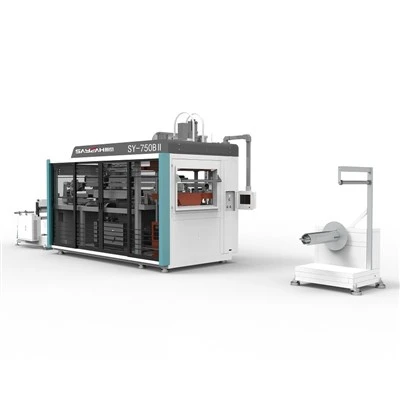
Plastic Cup Thermoforming Machine References
Occupational Safety and Health Administration. (2022). General Industry Standards for Power-Driven Equipment and Machinery. U.S. Department of Labor.
National Fire Protection Association. (2021). NFPA 70E: Standard for Electrical Safety in the Workplace. National Fire Protection Association.
Energy Star. (2023). Industrial Auxiliary Equipment Energy Efficiency Guide. U.S. Environmental Protection Agency.
American Welding Society. (2022). Safety Guidelines for Auxiliary Equipment in Welding Operations. American Welding Society.
Zhejiang Sayeah Machinery Co., Ltd.
Zhejiang Sayeah Machinery Co., Ltd. is one of the most reliable manufacturers and suppliers of auxiliary equipments in China, also supports high quality customized service. Please feel free to buy CE approved auxiliary equipments from our factory. For price consultation, contact us.
Address: Wanquan District Industrial Zone,West Of China National Highway 104, Sunlou Village, Wanquan Town, Pingyang County, Zhejiang Province. China
E-mail: sales@sayeahmachinery.com
WebSite: https://www.sayeahthermoforming.com/
