When I first signed on as a component supplier for ABB’s industrial automation division three years ago, I was handed a single rule that no one ever breaks: “ABB’s after-sales quality isn’t just a metric—it’s the face of every product we ship to our customers.” Back then, I thought this was just corporate speak, but after seeing the layers of checks ABB layers onto every after-sales interaction, I’ve come to understand it’s not just a saying—it’s a system built to keep customers running, no matter what. ABB
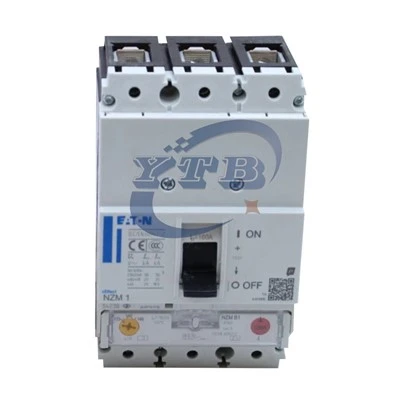
My job as a supplier is to deliver custom circuit breakers for their low-voltage switchgear line, so I’m embedded in ABB’s supply chain coordination team and get to see the after-sales side from the edge of the supplier network. What’s surprising is that ABB doesn’t treat after-sales as a “fix-it-later” chore. They treat it as a core part of product design. For example, every circuit breaker I ship has a digital tracking chip, not for billing, but for real-time visibility. If a customer calls with an issue, the ABB field service engineer can pull up exactly when the part was manufactured, how many times it’s been cycled, and even the environmental conditions it’s operated in—all within 10 minutes of the call being logged. This isn’t telematics for show; it means the engineer doesn’t show up with a generic part. Last quarter, a food processing plant in Wisconsin had a breaker fail mid-shift, and my team got an alert that the unit had been exposed to excess moisture (something the plant’s maintenance team didn’t mention in their initial call). We adjusted the spare we packed to have a moisture-sealed enclosure, and the fix took 15 minutes instead of two hours. That’s the kind of speed that comes from connecting after-sales directly to the product’s lifecycle data.
What I’ve also learned is that ABB doesn’t just trust their field engineers to get it right. They have a layered verification process that starts the second a service ticket is closed. Every six months, I get a custom report from ABB’s quality team that breaks down how my parts performed in after-sales cases: not just how many failures there were, but why they happened, and how the resolution could have been better. Last year, their report noted that some of my older circuit breakers were being returned because of a loose terminal screw, and they walked me through a revised tightening torque specification that cut those returns by 70% in six months. That iterative feedback loop is two-way, too—ABB’s after-sales team asks suppliers like me to attend quarterly workshops where we share field data, not just manufacturing specs. It’s not about blaming a supplier for a failure; it’s about making every part work better in the real world.
The people side of ABB’s after-sales quality might be the most underrated part. Their field service engineers aren’t just trained to replace parts—they’re trained to understand the customer’s business. I’ve sat in on a joint call where an ABB engineer didn’t just fix a faulty motor controller for a mining company, but noticed that the controller’s placement was making it vulnerable to dust. They walked the mine’s maintenance team through a bracket modification that would cut future failures, and the mine saved $200,000 a year in unplanned downtime. To make sure that level of care is consistent across thousands of engineers, ABB has a certification program that’s not just about technical skill—it’s about customer-centric problem-solving. Every engineer has to pass a test that simulates 20 different customer scenarios, from a 24/7 data center that can’t afford 10 minutes of downtime to a small bakery that needs a low-cost fix for its packaging line. And the program is updated every quarter with real data from the latest after-sales cases, so no engineer is relying on outdated playbooks.
One thing that sets ABB apart, as someone on the supplier side, is their commitment to transparency. When a product does fail—even if it’s not my part—ABB doesn’t hide it. Last year, there was a batch of variable frequency drives from a different supplier that had a manufacturing defect, and ABB’s after-sales team proactively reached out to every customer that had received one, even if the customer didn’t report an issue. They didn’t wait for calls; they launched a recall, sent engineers to inspect every unit, and compensated customers for any lost production. What stuck with me was that their internal debrief of the recall included a section on how their supplier communication process could have been better, and they revised their supply chain tracking to flag potential defects earlier. That transparency isn’t just good for customers—it’s good for suppliers like me, because we know that when ABB is accountable, we all have to raise our standards, which makes every part we build better.
I’ll admit, there are days when working with ABB feels like more work than other clients. They’ll ask for detailed data on every test we run, they’ll audit our manufacturing facilities twice a year, and they’ll follow up on even the smallest after-sales issue for months. But when I look at how many of my repeat customers come back specifically because the ABB after-sales team fixed their problem faster and cheaper than any other provider I know, it’s worth it. Last month, I visited a paper mill in Ohio that’s been using ABB switchgear for 12 years, and their maintenance manager told me, “We don’t buy ABB for the equipment. We buy it because when something breaks, ABB shows up before we even finish troubleshooting the problem ourselves.” That’s not luck—that’s the system ABB has built, where every after-sales interaction is a chance to make a customer’s life easier, not just a box to check.

If you’re looking for a partner that stands behind its products long after the sale is done, ABB’s approach to after-sales quality is one of the most reliable in the industry. To learn more about how our supply chain and ABB’s after-sales processes work together to keep your operations running smoothly, we encourage you to connect with our procurement team to explore collaborative solutions tailored to your needs.
BECKHOFF I/O Modules References
ABB Group. (2023). Global After-Sales Service Quality Report. ABB Corporate Communications.
International Organization for Standardization. (2022). ISO 9001:2015, Quality Management Systems – Requirements.
ABB Field Services Division. (2021). Customer-Centric Engineering in After-Sales Operations. ABB Technical Publications.
Yuntengbao Automation (Xiamen) Co., Ltd.
Address: Room 013, 4th Floor, No. 606-4, Xinglong Road, Huli District, Xiamen City, Fujian Province, China
E-mail: lrene@plcsupplychain.com
WebSite: https://www.plcsupplychain.com/
