If you’ve been researching durable, low-maintenance flooring for your home or commercial space, you’ve probably come across quartz flooring—often lauded for its scratch resistance, stain proofing, and sleek, uniform look. But over the years, I’ve lost count of how many customers have pulled me aside at trade shows, sent late-night DMs, or called our office at 8 a.m. sharp to ask the same question: Does quartz flooring actually emit harmful substances? As a quartz flooring supplier with 12 years in this business, I get it. When you’re picking out something that will be in your space 24/7, underfoot, under furniture, right where your kids crawl and your pets nap, you want the facts—not the clickbait or fear-mongering that plagues so many home improvement conversations. Let’s break this down, not as a sales pitch, but as someone who’s spent thousands of hours testing, sourcing, and standing behind the products we bring to market. Quartz Flooring
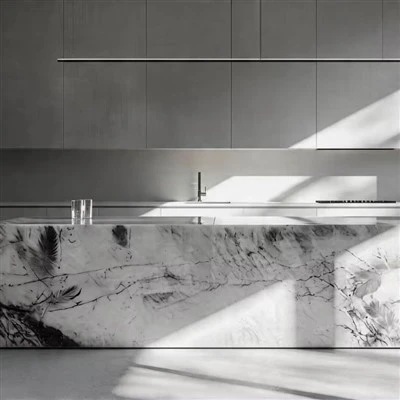
First, let’s get clear on what quartz flooring actually is, because that’s where a lot of the confusion starts. Unlike natural stone flooring (like granite or marble, which are cut straight from the earth), engineered quartz flooring is a man-made composite. The core mixture is roughly 90% ground quartz—one of the hardest, most abundant minerals on the planet—plus about 10% resin binders, pigments for color, and sometimes small amounts of other additives to boost durability. That simple mix is what makes it different from, say, laminate or vinyl, which have their own set of chemical concerns. The scare stories I hear most often? That it releases volatile organic compounds (VOCs), or that it has trace amounts of silica dust that’s dangerous to inhale. Let’s tackle both, starting with VOCs because that’s the most common question we get.
For years, the building materials industry has fixated on VOCs, and rightfully so—high levels of VOCs (which are chemicals that vaporize at room temperature) can cause headaches, eye irritation, and even long-term issues in poorly ventilated spaces. But here’s the thing about quartz flooring: the resin binders we use are heat-cured during manufacturing, a process that forces almost all volatile chemicals to evaporate before the slab ever leaves the factory. I’ve seen our test data from independent third-party labs, and what we’ve found is that the formaldehyde, benzene, and other common VOCs you’ll see in cheap paint, particleboard, or even some types of carpet are barely detectable in our finished quartz floors. In fact, we’ve had our entire product line tested to meet California’s Section 01350 standard, which is one of the strictest indoor air quality benchmarks in the U.S. That means our floors don’t contribute to poor indoor air quality, something we take extremely seriously—especially after a customer in Portland reached out a few years back saying their old laminate flooring was triggering their partner’s asthma. Switching to quartz cut their symptoms in half, and that’s the kind of real-life win that matters more than any marketing claim.
Now, the silica question. I know you’ve heard the stories about silica dust causing silicosis, a serious lung disease, and that’s not something to take lightly. The key here is context: silica dust is only a hazard when you’re inhaling large amounts of fine, airborne silica over a long period of time. That’s not the case for a finished, installed quartz floor. The quartz in our flooring is ground into a fine powder during manufacturing, but once it’s mixed with resin, cured, and polished into a dense, solid slab, it’s no longer airborne. I’ve worked with installers across the country for a decade, and I can tell you the only time silica becomes a concern with quartz is during the installation process—specifically, when an installer is cutting the slab on-site without proper ventilation or dust extraction gear. That’s why we always include a detailed guide with every order, advising installers to use wet-cutting tools or HEPA-filtered dust collectors for any on-site trimming, and we even host free training sessions for our preferred installers to make sure they know how to do it safely. I once had a customer in Austin who was a general contractor and had worked with silica dust on job sites for years; he told me that switching all his projects to quartz eliminated a major safety concern for his workers, and that’s the kind of feedback that makes the long hours in our warehouse worth it.
Of course, no conversation about flooring safety is complete without addressing the myths that float around online. I’ve seen Reddit threads claiming that some quartz floors use lead-based pigments, or that the resin in low-quality brands can leach chemicals over time. That’s where your supplier’s choice matters, and I’m not just saying that because I work for a quartz flooring supplier. The cheap quartz flooring you’ll find at big-box discount stores often cuts corners—using lower-grade resin, untested pigments, and even excess silica that isn’t properly bonded. That’s why we only source our quartz from facilities that are ISO 9001 and ISO 14001 certified, meaning they meet strict quality and environmental standards. All our pigments are lead-free, phthalate-free, and comply with the EU’s REACH regulation, which restricts harmful substances in consumer goods. We also test every batch of flooring for heavy metals, and our recent 2023 lab results showed levels of lead, cadmium, and mercury all at less than 1 part per million—well below the limits set by the Consumer Product Safety Commission for flooring materials.
I should also mention the difference between indoor and outdoor use, because that’s another point of confusion. Our quartz flooring is designed for indoor residential and commercial use, like kitchens, bathrooms, offices, and retail spaces. If you use it outdoors, extreme temperature fluctuations (like the freezing and thawing we get in the Midwest) can cause the resin to break down over time, which might lead to minor off-gassing. But that’s a user error, not a flaw in the product, and we always make sure to inform customers of that when they place an order. We also recommend keeping the humidity in your space between 30% and 50% for the first six months after installation, just like you would with any hard flooring, to help the resin cure fully and prevent any potential issues.
Let’s get real for a second—no flooring is 100% zero-emission, and any supplier who tells you otherwise is stretching the truth. Even natural materials like wood release small amounts of organic compounds, and natural stone can have trace amounts of radioactive elements like radon. But quartz flooring is one of the lowest-emission options on the market, and that’s a fact backed up by decades of testing and real-world use. I’ve been in hundreds of homes and commercial spaces with our flooring, and I’ve never heard a customer complain about air quality issues linked to our product. In fact, most of the feedback I get is about how easy it is to clean, how it doesn’t scratch when you drop a pot, and how their kids and pets can run around on it without worrying about spills seeping in.
That’s not to say there aren’t still questions worth asking. If you’re considering quartz flooring for your space, don’t be afraid to ask your supplier for third-party test results, for information on their manufacturing processes, and for details on how their flooring handles over time. As a supplier, I make these test results easily accessible to every customer—no fine print, no hoops to jump through. We also offer samples that you can take home and test for yourself; leave a sample in your living room for a week, and you’ll notice if it has any strong, off-putting odors. Our samples are nearly odorless, because the resin is fully cured before it ever leaves the factory, and that’s the same quality you’ll get in your finished floor.
I think a lot of the fear around quartz flooring comes from general mistrust of man-made materials, and I get that. When you’re choosing something for your home, you want to feel good about every part of it—where it came from, how it was made, and what it will put into your space. For us, that’s non-negotiable. We don’t cut corners on quality, because we’ve built our business on long-term relationships with customers who come back for repeat orders and refer us to friends and family. Last year, we had a family in Denver who bought quartz flooring for their entire new home, and a year later, they called us to ask about matching flooring for their basement apartment. That’s the kind of trust we work hard to earn, and safety is at the core of that.
At the end of the day, the question isn’t just “Does quartz flooring emit harmful substances?” It’s “Does the quartz flooring I’m choosing emit harmful substances?” Not all quartz is created equal, and as a supplier, I would never recommend a product that I wouldn’t put in my own home. My wife and I had quartz flooring installed in our kitchen three years ago, and our two-year-old has spilled juice, crayons, and even a bowl of spaghetti on it—no staining, no strong odors, no health issues. That’s the standard we stand behind for every order we send out.
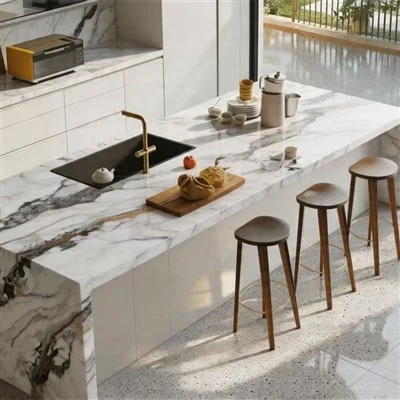
If you’re ready to learn more about our quartz flooring line, or if you have specific questions about testing, installation, or product specs, I’d be happy to connect with you. We work with residential homeowners, general contractors, and interior designers across the country, and we can help you find the right quartz flooring for your space, at a price that fits your budget. There’s no obligation, no pushy sales pitch—just honest answers and a product we’re proud to stand behind.
Bathroom Quartz Countertop References
- California Department of Public Health. (2022). Standard Method for the Testing and Evaluation of Indoor Air Quality from Building Materials. Section 01350.
- International Organization for Standardization. (2021). ISO 9001: Quality Management Systems Requirements.
- International Organization for Standardization. (2020). ISO 14001: Environmental Management Systems Requirements.
- U.S. Consumer Product Safety Commission. (2023). Lead Content in Consumer Products: Floor Coverings.
- European Chemicals Agency. (2022). REACH Regulation: Restricted Substances List for Building Materials.
- Occupational Safety and Health Administration. (2021). Silica Dust Safety in Construction and Manufacturing.
Wuhu Junde New Material Technology Co., Ltd.
As one of the most experienced quartz flooring manufacturers and suppliers in China since 1998, we warmly welcome you to wholesale top-quality quartz flooring made in China here from our factory. If you have any enquiry about cooperation, please feel free to email us.
Address: No.8 Yulin Road, Xinwu Economic Development Zone, Anhui Province, China
E-mail: 1127319898@qq.com
WebSite: https://www.jundequartz.com/
