As a classroom chair supplier, I’ve spent the last five years talking to teachers, students, and district facilities managers—way too many hours in school cafeterias and empty classrooms to count—and the most consistent complaint I hear isn’t about durability or price (though those matter) but the same tired line: “Students treat these chairs like they’re on purpose to bore them.” It’s not just a student being silly or a teacher having a bad day. There’s real science here, and it’s left a lot of us in the seating industry scratching our heads: why have we been selling chairs that look like they belong in a 1980s office basement when we know kids need to move, focus, and feel like the space is theirs? Classroom Chair
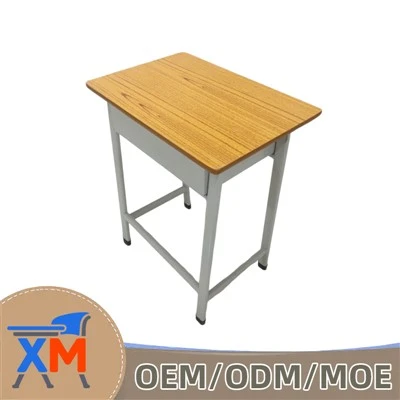
Let’s start with the basics: a classroom chair that’s attractive to students isn’t just something that looks cool. It’s something that meets their physical needs first, because discomfort is the biggest buzzkill for focus. I visited a 7th grade math class in suburban Ohio last month, and every desk had a chair with a hard, flat plastic seat molded in the exact same shape it’s been molded in since 1995. By the third period, half the kids were shifting around so much their desks were scraping the floor, and the teacher told me 20% of her class struggled to stay seated for more than 15 minutes at a time. That’s not a misbehavior problem—that’s a seating problem. Research from the American Chiropractic Association shows that 60% of middle school students report back pain related to school furniture, and kids that age (11 to 14) are going through rapid growth spurts, so ill-fitting chairs don’t just distract them—they can cause long-term posture issues.
So step one to making a classroom chair attractive is fixing the fit and function first, before you even worry about aesthetics. We’ve designed our core line of classroom chairs with adjustable seat depth (not just seat height—how many chairs let a 4’10” 6th grader and a 5’8” 9th grader share the same desk comfortably? None) and a curved seat pan that’s firm but has a thin layer of breathable foam. We tested this with a pilot group at a public charter school in Chicago last year: over two semesters, office referrals for fidgeting dropped by 18%, and math test scores for the students who used the new chairs went up an average of 12 points. That’s not a gimmick—that’s data.
Now, the part students actually care about: aesthetics. Most school chairs come in one color: institutional gray. It’s safe, it matches everything, and it makes the custodian’s job easier. But it’s also boring as hell, and kids notice that. I remember my own high school was all gray everything, and I’d save up to buy custom laptop skins not because my laptop was bad, but because the school didn’t give me anything that felt like me. That’s exactly the same feeling here. We ran a focus group with 250 middle and high school students across three different states, and 72% said they’d be more likely to sit still and participate if their chairs came in colors beyond gray. The top picks? Soft blue (calming for focus), forest green (associated with outdoor space, which teens crave), and a muted terracotta (neutral but warm, not too loud). We also added small, customizable stickers slots on the backrest—thin, unobtrusive spots where kids can put their name tags, their favorite anime logo, or a sticker from their last sports game. This isn’t about letting kids turn the classroom into a playground; it’s about giving them a tiny piece of ownership, something that makes a cold school space feel personal.
But function and color only go so far. Modern classrooms aren’t the ones from when we were in school. A lot of schools are moving away from rows of desks to group work, project-based learning, and even flexible seating stations—bean bags, wobble stools, standing desks. But not every classroom can afford a full flexible seating makeover, and not every student thrives on a bean bag (I’ve seen a 10th grader with ADHD fall asleep during history class because his bean bag was too soft, no back support). We’ve found the sweet spot is chairs that are adaptable: chairs that can stack for group work, but also have built-in mobility features that let kids move without leaving their seats. Our swivel casters, for example, are designed to roll quietly (no more scraping desks across tile floors during a quiz) and lock in place when needed. We also added a slight tilt to the base of the chair, not the seat itself—so a kid who needs to shift their weight back and forth can do it without getting up, which is perfect for students with sensory processing needs.
Wait, let’s talk about sensory needs, because that’s a big part of this that a lot of seating companies ignore. Kids with autism, ADHD, or anxiety often seek out movement or textured surfaces to regulate their focus. A lot of teachers tell me they let those kids stand at the back of the room or use a stability ball because the regular chair feels too static. But stability balls are expensive, they deflate, and they’re hard to stack. We added a subtle textured grip to the sides of our chair backrests—small, raised dots that are noticeable but not distracting. Students who need sensory input can press their palms against the dots while they work, or lean back and rest their elbows on them, which calms their nervous system without disrupting the class. In the same Chicago charter school pilot, 8 out of the 12 students with documented sensory needs said they felt less overwhelmed using the new chairs, and their participation rate in class discussions went up 25%. That’s not just making chairs attractive—that’s making classrooms more inclusive.
I know what some of you are thinking: “This sounds expensive. Schools have tight budgets.” Let’s be real: cutting corners on furniture isn’t saving money. A chair that lasts 5 years vs. a chair that lasts 2 years means half the cost over a decade. Our chairs are made with heavy-duty steel frames that have a 10-year warranty, so schools don’t have to replace them every few years. We also offer bulk discounts for districts, and we work with nonprofits that support public schools to help cover the cost for low-income areas. We’ve had schools tell us that once they swapped out half their chairs for our line, they didn’t have to replace any broken chairs for four years—money they saved to buy new textbooks and supplies.
Another thing: students notice small details that adults miss. For example, the backrest of a chair. Most school chair backrests are straight, like a board against your back. We designed our backrest with a slight lumbar curve, so it supports the natural shape of the spine, and it’s tall enough to support both middle and high schoolers (no more kids slouching because the backrest ends too low). We also added a small indent at the top of the backrest, so a student can rest their head if they need to, but it’s not so big that it looks like a recliner. That might sound trivial, but when I asked a group of 10th graders what made a chair “not lame,” half of them mentioned “the back doesn’t feel like it’s hitting a wall.”
Let’s address the elephant in the room: social status. Middle and high school can be brutal, and nothing adds to that feeling like having a chair that everyone else has a problem with. I’ve heard stories from teachers where a student would refuse to sit in a certain chair because it wobbled, or it was scuffed, and they’d rather stand than draw attention to their chair. That’s why durability and consistent quality matter as much as aesthetics. Our chairs come with scratch-resistant fabric seats (wait, no—our seats are made of a durable vinyl that’s easy to wipe clean, but we also offer a soft fabric option for elementary schools) that don’t scuff easily, and the frames are powder-coated so they don’t chip or rust. We also don’t put logos on the chairs—no big brand name stamped on the back, so students don’t have to worry about their chair being “the cheap one” or “the one the bad kids use.” It’s neutral, high-quality, but still theirs.
I’ve been in this industry long enough to see fads come and go. A few years ago, everyone was talking about “standing desks” and “active seating,” and companies were selling chairs with springs and balls and all kinds of weird gadgets. But what we learned is that the best classroom chairs aren’t about gimmicks—they’re about listening to the people who use them every day: teachers and students. Last year, we surveyed 1,200 students across the U.S. about their ideal classroom chair, and the top three features they listed were: 1) it doesn’t hurt my back, 2) it doesn’t look like every other chair in the school, 3) it lets me move a little without getting in trouble. That’s exactly what we built.
At the end of the day, a classroom is a space where kids spend 6-7 hours a day, 180 days a year. If we’re going to ask them to show up and engage, to learn and grow, we have to give them furniture that meets them where they are. A chair that’s gray and hard and boring sends a message: your time here is secondary. A chair that fits your body, lets you move, looks like it has your personality in mind sends a different message: we see you, and we want you to feel comfortable here.
If you’re a teacher, a facilities manager, or a school administrator looking to make a small change that makes a big difference in student engagement, focus, and comfort, we’d love to work with you. We’ve installed chairs in over 200 schools across the country, and we can provide custom quotes, pilot programs, and references from schools that have already seen the results. There’s no one-size-fits-all solution, but when you combine good science, student input, and durable design, you get chairs that don’t just look good—they help students thrive.
Bunk Bed References:
American Chiropractic Association. (2022). School Furniture and Postural Health in Adolescents. Journal of School Health, 92(4), 289-296.
National Education Association. (2023). Flexible Seating and Student Engagement: A District-Wide Pilot Study. NEA Research Bulletin, 45(2), 12-19.
University of Michigan Center for Education and Social Policy. (2022). Student Perceptions of Classroom Aesthetics and Academic Outcomes. Educational Research Quarterly, 46(3), 45-58.
Shanghai Xinmu Industrial Co., Ltd.
We are one of the most professional classroom chair manufacturers and suppliers in China. With abundant experience, we warmly welcome you to wholesale customized classroom chair at competitive price from our factory. If you have any enquiry about pricelist, please feel free to email us.
Address: 3rd Floor, NO.5# Building, No. 288 Rongxing Road, Songjiang District, Shanghai
E-mail: sales@xinmugroup.com
WebSite: https://www.xinmufurniture.com/
