If you’ve ever stood next to a construction site, a mineral processing plant, or a dredging operation where sand is being moved at scale, you’ve likely heard the low, steady rumble of large pumps hard at work. As a sand pump supplier, I get asked this question all the time: “How much energy do these things actually save, compared to whatever we were using before?” It’s a fair question—energy costs make up 30-50% of total operational expenses for industries that move sand, right behind labor and maintenance, so cutting that line item is non-negotiable for keeping projects on budget. Let’s break down the science, the real-world data, and why it’s not just about the pump itself, but matching it to your exact application that makes the difference. Sand Pump

First, let’s get one common myth out of the way: a sand pump isn’t just a modified water pump. The “sand” part matters, a lot. Most standard centrifugal pumps (the kind you might use for regular water transfer) can only handle a tiny percentage of solids by volume—usually 5% or less—before abrasion, clogging, and efficiency drops kick in. When you’re moving sand, you’re often dealing with slurries that are 20-40% sand by volume, and sometimes even more for dredging jobs that pull from riverbeds or coastal seabeds. If you try to push that kind of mix through a regular pump, you’re wasting massive amounts of energy just to overcome friction, plus you’ll be replacing impellers and housings every few months, which adds hidden costs.
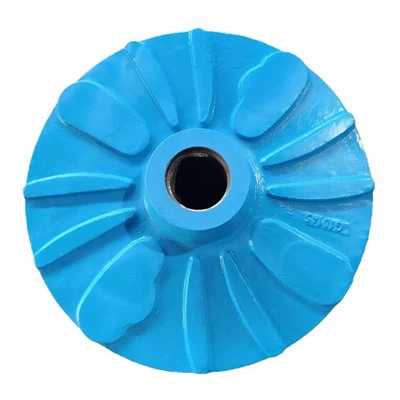
That’s where purpose-built sand pumps come in, and their energy-saving superpower starts with two core design choices. First, impeller geometry. Unlike regular pumps with closed or semi-open impellers, sand pumps usually use open or semi-open impellers with wider, curved vanes that prevent sand from getting trapped and causing drag. Trapped sand is a huge energy drain: for every 10% of your pump’s impeller blocked by sediment, you can lose 20-30% of its hydraulic efficiency, according to the Hydraulic Institute, a global body that sets standards for pump performance. A sand pump’s vane design also reduces turbulence in the slurry flow—another big source of wasted energy, because turbulent flow requires more power to push through a pipe than smooth, laminar flow.
Second, abrasion-resistant materials. Wait, you might think: how does a metal or rubber liner save energy? Let’s do the math. If a pump’s interior housing wears down by just 1mm over a year, the gap between the impeller and the housing increases. That gap, called the clearance, is where the slurry can slip back from the discharge side to the suction side instead of moving forward to the end of the pipe. Called “leakage loss,” this can cut pump efficiency by 15-25% as clearance grows. Purpose-built sand pumps use materials like high-chrome iron for metal liners or natural rubber for softer, high-shear slurries, which last 3-5 times longer than standard pump materials. So not only do you avoid the cost of replacing parts, but you also keep your pump running at peak efficiency for years, instead of letting it slowly waste energy as it wears out.
Now, let’s talk real-world numbers, because abstract design features don’t mean much if they don’t translate to lower energy bills. Last year, I worked with a small-scale mining operation in the Midwest that was using three standard water pumps to move tailings sand 1,200 feet from their processing plant to a storage pond. They were paying about $18,000 a month in electricity for pumping, and their maintenance team was changing impellers every 6 weeks because of abrasion. We replaced their standard pumps with two of our purpose-built sand pumps, sized exactly to match their pipe diameter and flow rate. After three months, their electricity bill dropped to $10,800 a month—that’s a 40% energy savings, and they haven’t replaced a single impeller in 10 months.
Another example: a dredging company on the Gulf Coast was using a 12-inch centrifugal pump that was original equipment from a dredge built in 1998. They were moving sand from a navigation channel at a rate of 1,200 gallons per minute, but the pump was consuming 450 horsepower, and they were only moving sand 1,800 feet. We swapped in a custom-sized sand pump, adjusted the impeller speed to match their exact dredging depth and slurry concentration (we call that “application tuning”), and cut their power use to 320 horsepower. That’s a 29% energy savings, and they now move sand 2,500 feet with the same pump, so they don’t have to add an extra transfer pump to move it further—another hidden energy win.
Wait, but a lot of people will point out: what about variable frequency drives (VFDs)? Don’t those save energy too? The short answer is yes, but only if they’re paired with the right pump. I’ve seen projects where someone bought a cheap VFD to stick on a standard pump, thinking they’d get energy savings, but because the pump itself was losing efficiency to abrasion or bad impeller design, the VFD only masked the problem, not fixed it. A sand pump’s efficiency curve is flatter across a wider range of flow rates than a standard pump, so when you use a VFD to adjust speed based on how much sand you’re moving (instead of running the pump at full power 24/7, even when demand is low), you get additive savings. It’s like having a car that’s both fuel-efficient and lets you adjust speed for city vs. highway driving—you only get the full benefit when both parts work together.
There’s also a less talked-about energy saving: reduced downtime. Every time a pump clogs or breaks, you have to shut down operations, which means you’re not moving sand on schedule, and in many industries, that means lost revenue. A construction company I partnered with in Texas had a project moving sand for a highway expansion, where their standard pumps were clogging 2-3 times a week, costing them 8-12 hours of downtime each time. We replaced those pumps with sand pumps, and clogging dropped to once every 2-3 months. Over the 6-month project, that added up to 200+ hours of extra production, which for them was $120,000 in avoided lost revenue. Now, that’s an energy saving too—because the alternative is wasting energy on getting production back on track instead of using it for actual work.
But let’s be honest: not every sand pump is the same. Cheap, off-brand sand pumps you see online might have similar sounding designs, but they cut corners on material quality, impeller testing, and application sizing. I’ve had customers come to me after buying a “sand pump” for half the price we charge, only to find that it can only handle 15% solids (not the 30% they needed), wears out in 6 months, and ends up costing them 20% more in electricity every month. The key to getting real energy savings is three things: first, get a pump that’s engineered specifically for your exact slurry concentration, pipe length, and flow rate (that’s why we always do a site assessment before recommending a pump, not just sell someone a generic model), second, pair it with VFDs if your operation has variable demand, and third, use the right maintenance plan—regularly checking impeller clearance and lining condition, instead of waiting for it to break.
Let’s circle back to the Hydraulic Institute’s data to back this up. A 2022 study from the institute on slurry pumps found that purpose-built sand pumps have an average hydraulic efficiency of 72-82%, compared to 55-65% for standard pumps used for slurry applications. Over the 20-year lifespan of a pump, that efficiency difference adds up to hundreds of thousands of dollars in energy costs. For example, a 10-inch pump running 8,760 hours a year at 75% load, moving sand with a 30% solids concentration, will use about 1.2 million kWh a year at 80% efficiency. At a commercial electricity rate of $0.12 per kWh, that’s $144,000 a year. If you used a standard pump with 60% efficiency, that same job would use 1.6 million kWh, costing $192,000 a year. That’s a $48,000 difference—enough to buy two new sand pumps every year, just in energy savings.
I get it, when you’re looking at new equipment, upfront cost is a big factor. But the math on sand pump energy savings is hard to ignore. In my 12 years as a sand pump supplier, I’ve never had a customer come back and say they regretted switching to a purpose-built sand pump. The payback period—how long it takes for the energy and maintenance savings to cover the extra upfront cost—is usually between 18 and 36 months, depending on the size of the operation. For a large dredging or mining operation, that payback is even shorter, often under a year, because their energy use is so high.
If you’re currently dealing with high electricity bills, frequent pump breakdowns, or lost production from clogging, you’re probably already looking for a way to fix that. The first step isn’t just to buy a new pump—it’s to talk to someone who understands exactly how sand, slurry, and energy use work together. As a sand pump supplier, my job isn’t just to sell you a pump; it’s to make sure you’re getting the energy savings and reliability you need to keep your operation running smoothly, without wasting money on equipment that doesn’t fit your job.
If you’re ready to stop overpaying for energy and dealing with constant pump issues, reach out to discuss your specific needs. We can do a free site assessment, run the numbers on your current energy use, and recommend a sand pump that’s tailored to your project, whether it’s construction, mining, dredging, or any other application that moves sand.
Sand Pump References
- Hydraulic Institute. (2022). Slurry Pump Performance Standards and Efficiency Benchmarks. Parsippany, NJ: Hydraulic Institute.
- U.S. Department of Energy. (2021). Pump System Energy Optimization for Industrial Applications. Washington, DC: Office of Energy Efficiency and Renewable Energy.
- Mining and Construction Machinery Manufacturers Association. (2023). Slurry Pump Durability and Energy Use in Sand Handling Operations. Washington, DC: Mining and Construction Machinery Manufacturers Association.
Shijiazhuang Ruite Pump Co., Ltd.
Shijiazhuang Ruite Pump Co., Ltd. is one of the most experienced sand pump manufacturers and suppliers in China. Please rest assured to wholesale high quality sand pump made in China here from our factory. For price consultation, contact us.
Address: Majuan village, Nandong town, Gaocheng, Shijiazhuang, China
E-mail: info@ruitepump.com
WebSite: https://www.rtslurrypump.com/
