Hey there, fellow compressed air users! If you’ve ever spent time shopping for an air compressor, chances are you’ve come across the terms “direct-drive” and “belt-drive” — and if you’re anything like I was when I first started in this industry, you might have glossed over them, assuming they were just minor details. Let me tell you: those two little words can make a huge difference in how your compressor performs, how much it costs to run, and how long it lasts. As someone who’s been supplying air compressors to businesses like yours for over a decade, I’ve seen customers make costly mistakes because they didn’t understand the gap between these two designs. Today, I want to break this down in plain, real-world terms — no overly technical jargon, just what you need to know to make the right call. Air Compressor
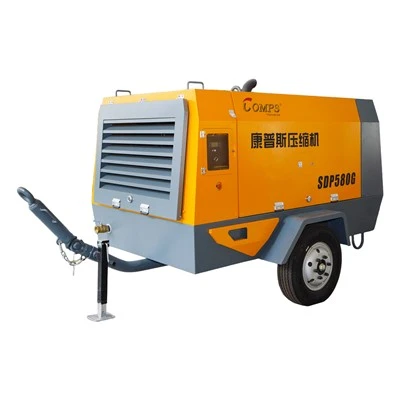
Let’s start with the basics: every air compressor has two core parts that work together: the electric motor (or gas engine, for portable units) and the pump, which is the part that actually compresses air. The only real difference between direct-drive and belt-drive is how these two parts connect. With a direct-drive compressor, the motor shaft is physically attached straight to the pump’s drive shaft. No extra parts, no give, no middleman. A belt-drive setup uses a rubber or polyurethane belt to link the motor’s pulley to the pump’s pulley. That belt does the heavy lifting of transferring power from the motor to the pump. On the surface, that might sound like a tiny variation, but dig into the details, and you’ll see why this shapes every part of owning and operating your compressor.
Let’s talk about efficiency first — because that’s where the cost savings add up week after week. A direct-drive compressor transfers almost 100% of the motor’s power to the pump. There’s no slippage, no energy lost to moving extra parts, no friction from a belt rubbing. If you’re running your compressor 8 hours a day, 5 days a week, that small 2-3% energy loss with a belt-drive might not seem like much, but over a year? That’s hundreds of dollars wasted on electricity for no reason. I had a customer last year who ran a 5HP belt-drive compressor at his auto body shop. After switching to a direct-drive unit, he tracked his energy bills for six months and saved over $1,200. That’s money he put back into hiring a part-time painter and upgrading his booth. Of course, efficiency isn’t the only piece. Direct-drive units also run at a fixed speed, usually around 1,750 or 3,450 RPM. That means they’re consistent, reliable for steady-duty cycles — perfect for applications that need a constant stream of compressed air, like manufacturing lines or woodworking shops.
Now, what about belt-drive compressors? Their biggest advantage is flexibility. You can swap out the belt for a different size to adjust the pump’s speed, which lets you match the compressor to specific tasks. For example, if you need a higher-pressure pump for sandblasting, you can change the belt pulley size on the pump to speed it up, without buying an entirely new motor. That flexibility is why belt-drive units have long been popular for portable compressors or jobs that use a mix of tools, where air demand fluctuates day to day. But that flexibility comes with a tradeoff: maintenance. Let’s be honest — belts wear out. They stretch, they crack, they get contaminated with oil or dust. You can’t just ignore a belt forever. Every few months, you have to check the tension, adjust it, and eventually replace it. A loose belt will slip, waste energy, and cause the pump to work less efficiently. A too-tight belt will put extra strain on both the motor and the pump’s bearings, leading to premature wear. I see this all the time with small construction companies that use belt-drive portable compressors. They wait until the belt snaps on a job site, and then they’re stuck waiting for a replacement — costing them a whole day of work, not to mention the stress of missing a deadline. Direct-drive units don’t have this maintenance hassle. No belt to adjust, no belt to replace. For busy shops that don’t have time to do regular upkeep, that’s a huge win.
Next, let’s talk about size and weight. Direct-drive compressors are smaller and lighter than belt-drive models of the same power. Because the motor and pump are connected directly, there’s no need for extra pulleys, belts, or guards to hold them in place. That compact design makes direct-drive units ideal for tight spaces — like under a workbench in a small garage, or in a crowded manufacturing plant where every square foot matters. Belt-drive units, on the other hand, are bulkier. The belt and pulley system adds extra length to the unit, so they take up more space. That’s fine if you have a dedicated compressor room, but if you’re working in a small shop or need to move the compressor around, the extra weight and size of a belt-drive can be a real hassle. It’s also worth noting that belt-drive units are often quieter, too. The belt acts as a buffer between the motor and the pump, absorbing some of the vibration and noise. If you’re running a compressor in a space where noise is a concern — like a dental lab or a small office that uses air tools — a belt-drive might be more comfortable to work around. But modern direct-drive units have come a long way: many now have insulated motors and precision-engineered shafts that reduce vibration, so the noise gap is smaller than it used to be. You won’t have to put up with the racket of a 1990s belt-drive compressor if you go direct-drive today.
When it comes to lifespan, there’s a common myth that belt-drive units last longer. Let me set the record straight: that’s only true if you maintain them properly. A belt-drive compressor’s motor and pump run at slightly different speeds (since the pulleys are sized to adjust speed), and the belt cushions some of the startup shock. But if you don’t tension the belt correctly, or if you ignore worn belts, that shock can damage the bearings in both the motor and the pump. I’ve seen belt-drive units that lasted 15 years, and I’ve seen ones that died in 3 because of a neglected belt. Direct-drive units, because they have fewer moving parts, tend to have longer lifespans when cared for. No belt to wear out means fewer parts to fail. Most direct-drive units come with a 5-year or 10-year warranty on the pump, while belt-drive units usually have a 2-3 year pump warranty. That’s not just a sales pitch — that’s based on real-world performance data from the compressors we supply.
Let’s also think about application-specific use cases, because that’s the biggest factor in choosing which one is right for you. If you’re running a high-demand, continuous-duty operation — like a car manufacturing line, a woodworking shop that runs all day, or a metal fabrication business that uses multiple air tools consistently — a direct-drive compressor is almost always the better choice. They handle steady loads well, save you money on energy, and require almost no maintenance. On the flip side, if you’re a small contractor who uses a compressor on weekends or for occasional jobs, like a plumber who runs a nail gun a few times a week, or a painter who needs to adjust pressure for different tasks, a belt-drive unit might be more cost-effective upfront. They’re cheaper to buy initially, and the flexibility to adjust speed for different jobs is worth the small maintenance hassle for light use. That said, I always advise customers to think long-term. Even for small, occasional use, if you find yourself increasing your compressor’s workload over time, a direct-drive unit will save you money in the long run, even if the upfront cost is a bit higher.
Wait, let’s touch on upfront cost too, since that’s a big consideration for most small businesses. Belt-drive compressors usually have a lower initial price tag. The parts are simpler to manufacture, and there’s less precision engineering needed for the shaft connection. A 5HP belt-drive unit might cost $500 less than a comparable direct-drive model. But again, that initial savings often gets eaten up over time in energy bills and maintenance. We have a calculator on our website (I won’t link to it, but if you ask our team, we’ll run the numbers for you) that shows for a compressor used 2,000 hours a year, the energy savings from a direct-drive unit will pay off that $500 difference in less than a year. If you use it less, that payback period stretches, but it’s still worth considering when you’re budgeting.
I want to be honest here — there’s no one-size-fits-all answer. What works for one business might not work for another. I’ve had a customer who runs a small mobile tire repair business swear by his belt-drive portable compressor, because he can adjust the pump speed to run a impact wrench and an air jack without buying a separate unit. And I’ve had a 10-person machine shop that upgraded to direct-drive units and cut their annual energy costs by $3,000, which they used to hire two new machinists. The key is to match the compressor to your specific needs, not just go with whatever’s cheapest upfront or whatever your neighbor uses.
Let me also address some common misconceptions I hear all the time. “Direct-drive units are less powerful” — no, that’s not true. The power rating (in HP or CFM) is the same for comparable models, regardless of drive type. The difference is how that power is delivered. “Belt-drive units require a lot of maintenance” — that’s only if you skip checking the belt every month. We recommend checking belt tension once a month for belt-drive units, and replacing the belt every 2-3 years, depending on use. That’s a 10-minute job once a month, which is hardly a burden for most businesses.
If you’re still unsure which one is right for you, here’s a quick checklist to run through: How many hours a day do you run your compressor? More than 4 hours a day? Direct-drive is probably better. Do you need to adjust air pressure or pump speed for different tasks? Belt-drive might be the flexible choice for you. Do you have limited space in your shop or job site? Direct-drive’s compact size is a big plus. Do you want to minimize long-term energy costs? Direct-drive will save you money year after year.
At the end of the day, as an air compressor supplier, my job isn’t to push one model over the other — it’s to help you pick the one that works best for your business. I’ve seen too many customers buy the wrong compressor and end up frustrated: either their belt breaks on a job site, or their energy bills keep climbing, or their unit wears out way sooner than it should. That’s why I always take the time to ask questions: How do you use your compressor? How many hours a day? What tools do you run? And then I walk them through the pros and cons of direct-drive vs belt-drive, no hidden agendas, no upselling something they don’t need.
If you’re in the market for a new air compressor, or if you’re looking to upgrade your current one, don’t make the mistake of overlooking the drive type. It’s not just a tiny detail — it’s a decision that will impact your business for years to come. Whether you’re a small business owner, a contractor, or a shop manager, I’d be happy to walk you through your options, answer any questions you have about direct-drive and belt-drive units, and help you find the right fit for your needs. Just reach out, and we can talk through your specific situation, no pressure, no sales pitches.
Diesel Air Compressor References:
- Compressed Air and Gas Institute. "Centrifugal and Reciprocating Compressor Design and Efficiency Standards." 2022.
- U.S. Department of Energy. "Improving Compressed Air System Performance: A Sourcebook for Industry." 2021.
- Gardner Denver. "Direct-Drive vs. Belt-Drive Air Compressors: Performance and Maintenance Comparison." 2023.
- Atlas Copco. "Compressor Drive Technology: Balancing Flexibility and Efficiency." 2022.
Comps Compressor (Shijiazhuang) Co., Ltd.
As one of the most professional air compressor manufacturers and suppliers in China, we’re featured by quality products and good price. Please rest assured to buy customized air compressor made in China here from our factory. Also, pricelist is available.
Address: No.172, Nanche Road, Shijiazhuang Equipment Manufacturing Industrial Park, Luancheng District, Shijiazhuang City, Hebei Province
E-mail: kpswmb@kangpusi.com
WebSite: https://www.comps-compressor.com/
