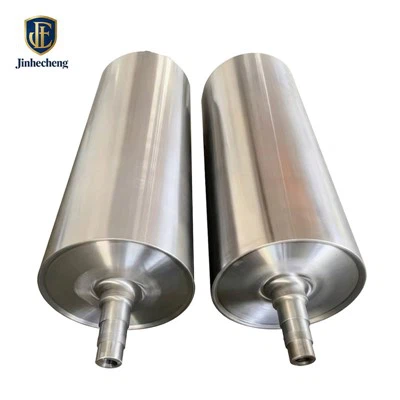
As a supplier of chrome plated rollers, I often encounter inquiries from customers regarding the straightness tolerance of these essential components. Straightness tolerance is a critical factor that significantly impacts the performance and functionality of chrome plated rollers in various industrial applications. In this blog post, I will delve into the concept of straightness tolerance, its importance in chrome plated rollers, and how it is measured and controlled in our manufacturing process. Chrome Plated Rollers
Understanding Straightness Tolerance
Straightness tolerance refers to the allowable deviation from a perfectly straight line along the length of an object. In the context of chrome plated rollers, it is the maximum amount by which the roller’s axis can deviate from a straight line while still meeting the required specifications. This deviation can occur due to various factors, including manufacturing processes, material properties, and environmental conditions.
The straightness of a chrome plated roller is crucial because it directly affects the quality and consistency of the products being processed. For example, in printing applications, a roller with poor straightness can cause uneven ink distribution, resulting in blurred or inconsistent prints. In web handling applications, such as in the paper or textile industries, a non – straight roller can lead to web wrinkling, tension variations, and reduced product quality.
Importance of Straightness Tolerance in Chrome Plated Rollers
Product Quality
As mentioned earlier, the straightness of chrome plated rollers has a direct impact on the quality of the products being processed. In industries where precision is key, such as electronics manufacturing or high – end printing, even a slight deviation in roller straightness can lead to significant defects in the final product. For instance, in the production of printed circuit boards, a non – straight roller can cause misalignment of the printed patterns, resulting in faulty circuits.
Equipment Performance
Straight chrome plated rollers are essential for the smooth operation of machinery. When a roller is not straight, it can cause excessive vibration and wear on the equipment. This can lead to increased maintenance costs, reduced equipment lifespan, and even unexpected breakdowns. In a conveyor system, for example, a non – straight roller can cause the conveyor belt to run off – track, leading to jams and potential damage to the belt and other components.
Process Efficiency
Maintaining proper straightness tolerance in chrome plated rollers can improve process efficiency. A straight roller ensures consistent contact with the material being processed, which helps to maintain uniform tension and speed. This reduces the likelihood of product waste and rework, ultimately increasing productivity and reducing costs.
Measuring Straightness Tolerance
There are several methods for measuring the straightness tolerance of chrome plated rollers. One of the most common methods is using a straightedge and a feeler gauge. A straightedge is placed along the length of the roller, and the feeler gauge is used to measure the gap between the straightedge and the roller surface at various points. The maximum gap measured represents the straightness deviation.
Another method is using optical measuring systems, such as laser interferometers. These systems use laser beams to measure the shape and straightness of the roller with high precision. Laser interferometers can detect even the smallest deviations and provide detailed information about the roller’s straightness profile.
In our manufacturing process, we use a combination of these methods to ensure the straightness of our chrome plated rollers. We perform multiple measurements at different stages of production, from the raw material to the finished product, to guarantee that the rollers meet the required straightness tolerance.
Controlling Straightness Tolerance in Manufacturing
Controlling the straightness tolerance of chrome plated rollers starts with the selection of high – quality raw materials. The material used for the roller core should have good dimensional stability and low internal stress to minimize the risk of deformation during the manufacturing process.
During the machining process, we use advanced CNC (Computer Numerical Control) machines to ensure precise shaping of the roller. These machines are programmed to maintain tight tolerances, which helps to achieve the desired straightness. After machining, the rollers undergo a heat treatment process to relieve internal stress and improve their mechanical properties.
The chrome plating process also plays a crucial role in maintaining straightness. We use a carefully controlled plating process to ensure uniform deposition of the chrome layer. Uneven plating can cause the roller to warp, leading to a deviation in straightness.
Finally, we have a strict quality control system in place to inspect the straightness of each roller before it leaves our facility. Any roller that does not meet the specified straightness tolerance is either re – worked or rejected.
Industry Standards for Straightness Tolerance
The straightness tolerance requirements for chrome plated rollers vary depending on the application. In general, industries that require high precision, such as aerospace or semiconductor manufacturing, have more stringent straightness tolerance requirements. For example, in some aerospace applications, the straightness tolerance may be as low as ±0.005 mm per meter of roller length.
In less demanding applications, such as general industrial conveyor systems, the straightness tolerance can be more relaxed, typically in the range of ±0.05 mm to ±0.1 mm per meter of roller length.
As a supplier, we are well – aware of these industry standards and can customize the straightness tolerance of our chrome plated rollers to meet the specific needs of our customers.
Conclusion
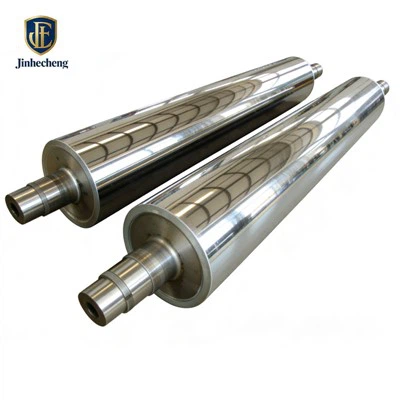
In conclusion, the straightness tolerance of chrome plated rollers is a critical factor that affects product quality, equipment performance, and process efficiency. As a supplier, we understand the importance of maintaining strict straightness tolerance in our manufacturing process. We use advanced measurement and control techniques to ensure that our rollers meet the highest standards of quality and performance.
Chrome Plated Rollers If you are in the market for high – quality chrome plated rollers with precise straightness tolerance, we would be more than happy to discuss your requirements. Our team of experts can provide you with detailed information about our products and help you select the right rollers for your application. Contact us today to start a conversation about your chrome plated roller needs.
References
- ASME Y14.5 – 2018, Dimensioning and Tolerancing Standard
- ISO 1101:2017, Geometrical product specifications (GPS) — Geometrical tolerancing — Tolerances of form, orientation, location and run – out
- Machinery’s Handbook, 31st Edition, Industrial Press Inc.
Qingdao Jinhecheng Machinery Co., Ltd.
Qingdao Jinhecheng Machinery Co., Ltd. is one of the most professional chrome plated rollers manufacturers and suppliers in China, featured by quality products and low price. Please rest assured to buy discount chrome plated rollers made in China here from our factory. Customized orders are welcome.
Address: Aishan Industrial Park, Yanghe Town, Jiaozhou, Qingdao City, Shandong Province
E-mail: alice@jhcroller.com
WebSite: https://www.jhcroller.com/
